How to Install a Skylight in Melbourne Without It Leaking or Overheating Your Home

Natural light has the power to transform a cramped, dim room into a vibrant sanctuary, yet for many Melbourne homeowners, the path to a brighter home is clouded by technical concerns. In our volatile "four seasons in one day" climate, a skylight is more than just a window it is a critical structural and thermal intervention.
Whether you are navigating the complexities of a heritage Victorian terrace or a modern mid-century renovation, success lies in the details. This guide explores the essential "One-Crew" advantage, the precision of Melbourne-specific thermal shielding, and the structural non-negotiables required to ensure your investment is leak-free, energy-efficient, and architecturally stunning for decades to come.
The One-Crew Advantage: Why Integrated Trades Are Non-Negotiable for Skylight Success
In the world of home renovation, there is a common, frustrating phenomenon known as "the trade gap." This occurs when a project requires multiple specialists—in this case, a roofer, a carpenter, and a plasterer but no single person is responsible for how their work intersects. When a skylight fails, it usually isn't because the glass was faulty; it’s because the hand-off between these three distinct stages was botched.
Hiring a specialist team that integrates all three disciplines in-house isn't just a matter of convenience; it is a critical safeguard for your home’s structural integrity and your own peace of mind.
Eliminating the "Finger-Pointing" Trap: The Vital Importance of Single-Source Accountability
In the complex landscape of Victorian home renovation, the "finger-pointing trap" is a well-known headache for homeowners. This phenomenon typically occurs when a project is fragmented across multiple independent contractors a carpenter for the structural framing, a roofer for the external waterproofing, and a plasterer for the internal finish. While each may be skilled in their specific silo, the lack of a unified oversight often leads to a "responsibility gap" at the most critical junctions of the installation.
The High Cost of Fragmented Trades
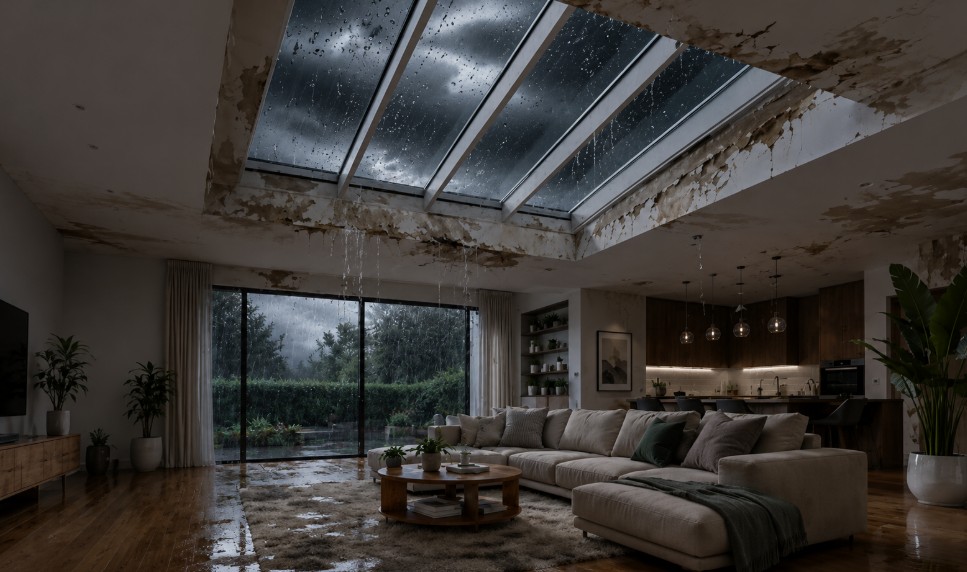
Imagine a scenario following one of Melbourne’s notorious seasonal downpours. You notice a damp patch forming on your newly plastered ceiling. You call the roofer, who claims his flashing is perfect but suggests the carpenter’s timber kerb has shifted. The carpenter, in turn, insists his framing is structurally sound and blames the roofer’s "sub-par" seal. Finally, the plasterer refuses to touch the repair until the leak is definitively fixed.
As the homeowner, you are left stranded in a cycle of blame, managing conflicting schedules and potentially paying three separate call-out fees for a problem that no one wants to own.
The "One-Crew" Solution
An integrated "One-Crew" model dismantles this risk by ensuring Single-Point Accountability. When a single specialist firm employs the carpenter, roofer, and plasterer under one management structure, the "hand-off" between trades becomes a seamless transition rather than a point of failure.
- Integrated Quality Control: In a unified team, the carpenter understands precisely how the roofer needs the kerb constructed to ensure a watertight seal. They are not working to a generic template; they are working to a shared, proven system.
- Structural and Aesthetic Harmony: The plasterer isn't just "patching a hole"; they are briefed on the specific angles the carpenter has framed to ensure maximum light dispersion into the room. This synergy results in a finish that looks like an architectural feature rather than an afterthought.
- Reduced Lead Times: Coordinating three independent businesses often results in weeks of delays. A "One-Crew" approach allows for a "Rapid-Envelope" installation, where the roof is opened, framed, and sealed within a single, weather-tight window, significantly reducing the time your home is exposed to the elements.
Ultimately, by removing the opportunity for trades to blame one another, you secure a guarantee that covers the entire aperture from the first tile removed to the final coat of paint.
Maintaining the Integrity of Your Home’s Envelope
A skylight installation is, by its very nature, a paradoxical undertaking: you are intentionally creating a hole in your home’s primary defence against the elements to improve the environment within. To execute this without compromising the building's lifespan, every phase must be a masterclass in Structural Synchronisation. When independent trades work in isolation, the "envelope" the protective barrier between your living space and the unpredictable Melbourne sky is at risk. An integrated team ensures that the structural, weatherproofing, and thermal layers function as a single, high-performance unit.
The Carpenter’s Role: Preserving Load-Bearing Integrity
The skeleton of your roof is a precision-engineered system of trusses or rafters designed to distribute tonnes of weight across your external walls.
- Precision Cutting: When a carpenter creates an opening, they aren't just "making space." They must install a "header and trimmer" system essentially a secondary frame to catch the load of the interrupted timber.
- Future-Proofing: A specialist carpenter ensures that this new framing is perfectly square and level. If the internal frame is even a few millimetres out of alignment, the skylight unit will not sit flush, creating microscopic gaps that eventually lead to wind noise or water ingress.
The Roofer’s Role: The Impermeable Seal
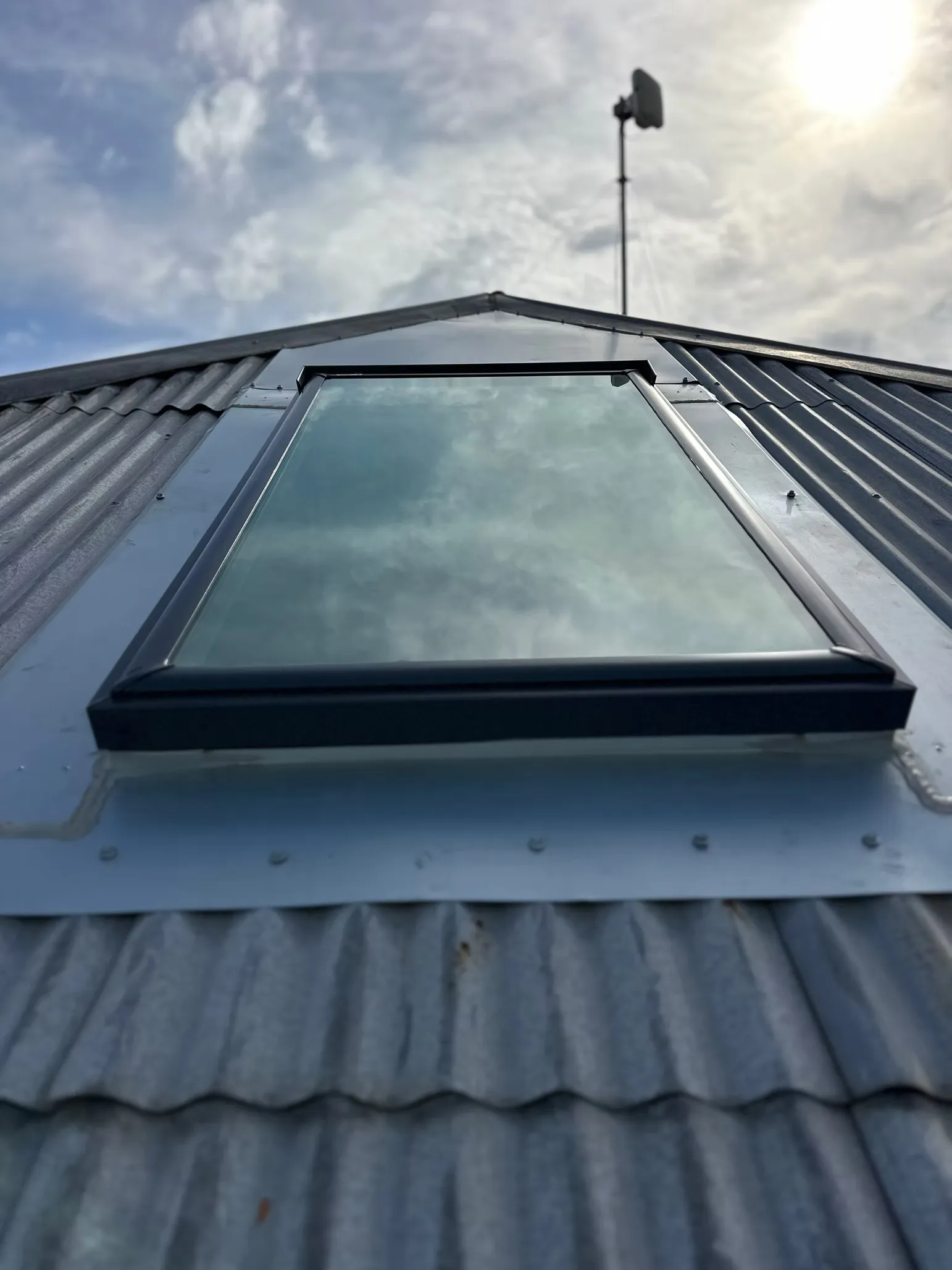
Once the structure is sound, the roofer must integrate the new window into the existing roof cladding—whether that be traditional terracotta tiles, modern Colorbond steel, or heritage slate.
- Advanced Flashing: In Melbourne’s high-wind rain events, water doesn't just fall; it is often blown upwards and sideways. The roofer must employ high-grade, custom-profiled flashing that directs water away from the aperture.
- The Sinking Principle: They ensure the unit is "stepped" correctly into the roofline, preventing "damming"—where debris and water pool behind the window, eventually forcing their way under the seals.
The Plasterer’s Role: Preventing the Thermal Bridge
Often overlooked as a purely "aesthetic" trade, the plasterer is actually the final guardian of your home's thermal efficiency.
- Thermal Bridging: If the internal light shaft is finished without proper insulation behind the plasterboard, it creates a "thermal bridge." This cold spot acts as a magnet for warm, moist indoor air, leading to hidden condensation and, eventually, toxic mould growth within the ceiling cavity.
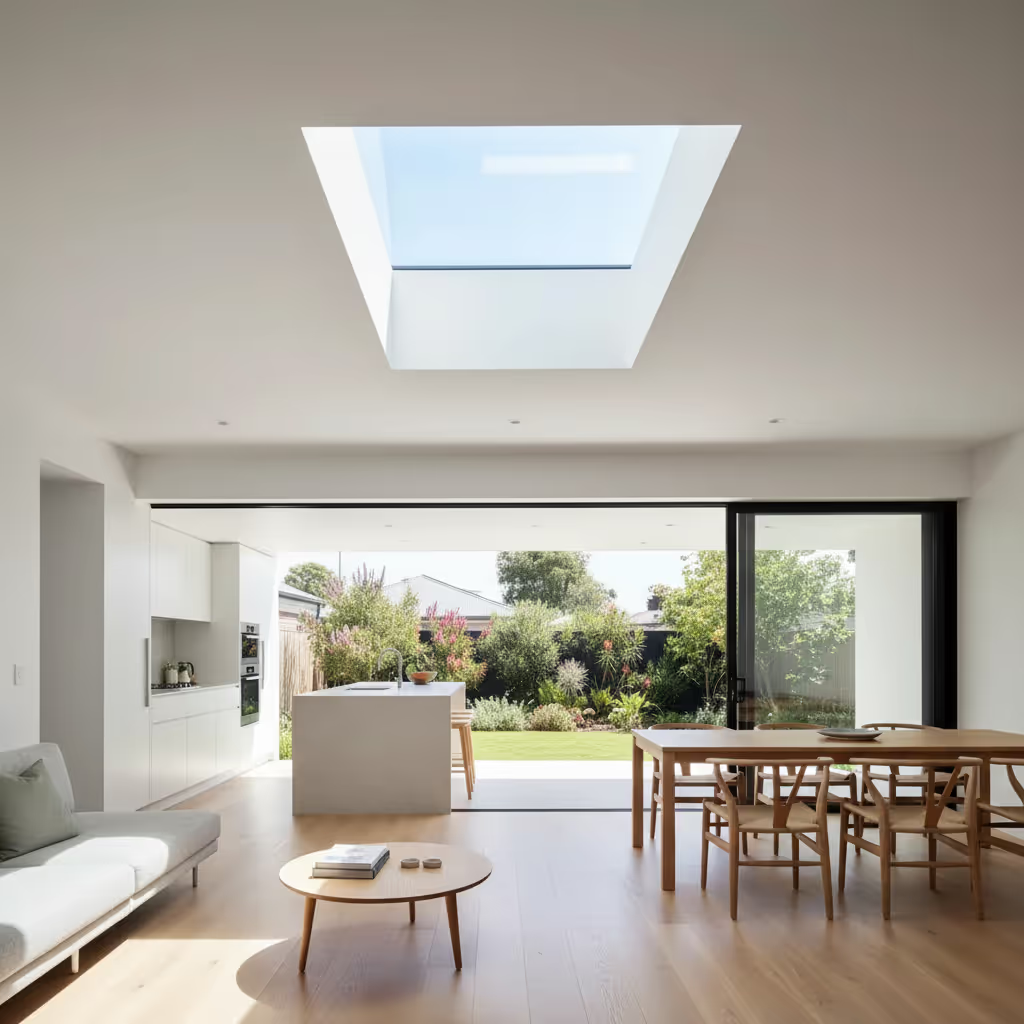
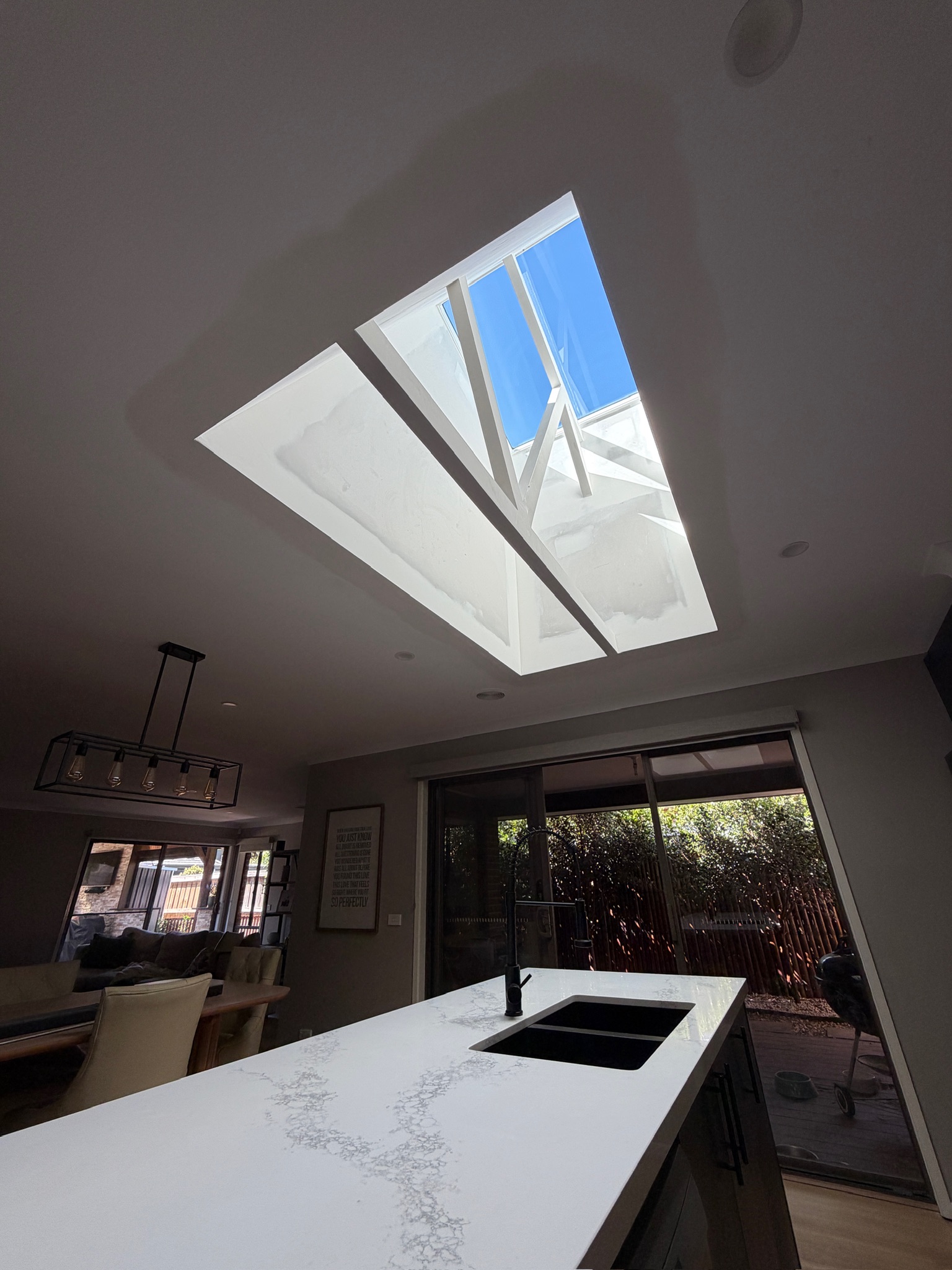
- The Light Well Finish: By working in sync with the carpenter, the plasterer creates a flared light well that is both structurally insulated and visually seamless, ensuring the "envelope" is as airtight as it is beautiful.
Melbourne-Specific Thermal Shielding: Managing the Four Seasons in One Day
In the unique climate of Melbourne, a skylight is far more than just a window in the roof; it is a sophisticated thermal regulator. Because our local weather can swing from a 40°C northerly buster to a frigid Antarctic dampness within hours, a standard "off-the-shelf" installation often results in a room that is either a greenhouse in January or an icebox in July.
To achieve true comfort, your installation must incorporate Thermal Shielding a strategic combination of glass technology, ventilation, and physical barriers designed specifically for the Victorian latitudes.
The Science of High-Performance Glazing
The most critical component of thermal shielding is the glass itself. In a modern Melbourne home, single-glazed or even standard double-glazed units are often insufficient. We prioritise High-Performance Low-E (Low Emissivity) glass.
- How it works: This microscopic, transparent coating reflects radiant heat. In summer, it bounces solar heat back outside before it can penetrate your living space. In winter, it reflects your expensive indoor heating back into the room, preventing it from escaping through the glass.
- UV Protection: Quality thermal shielding should block up to 99% of UV rays. This isn't just about heat; it’s about protecting your hardwood floors and designer furniture from the aggressive Victorian sun.
Active vs. Passive Ventilation
Heat rises. In a double-storey terrace or a home with high ceilings, heat becomes trapped at the highest point usually right against your skylight.
- The "Chimney Effect": By opting for an openable (venting) skylight, you can utilise passive stack ventilation. Opening the skylight allows the hottest air to escape, naturally drawing cooler air in through your lower windows.
- Solar-Powered Automation: For the ultimate "set and forget" shielding, solar-powered venting units include rain sensors. They can stay open to purge heat while you’re at work, but will automatically close the moment a Melbourne "cool change" brings a sudden downpour.
Integrated Blinds and External Shading
Sometimes, the best way to manage heat is to stop it before it even touches the glass.
- Blockout Blinds: Integrated honeycomb or pleated blinds provide an extra layer of still air, creating a thermal break.
- The "Aspect" Factor: A north-facing skylight requires significantly more shielding than a south-facing one. We assess the orientation of your roof to determine if you need additional external flashings or specific tinting levels to manage the harsh midday glare without losing the "wow factor" of the light.
A Note on Professional Specification
Thermal shielding only works if the "light well" (the shaft between your ceiling and the roof) is properly insulated. Without high-R-value batts lining the internal shaft, your expensive glass is undermined by heat transfer through the plasterboard. A specialist installer ensures the entire vertical column is a sealed, insulated thermal barrier.
The Structural Checklist: From First Cut to Final Finish
For many Melbourne homeowners, the hesitation to install a skylight stems from a simple fear: "What are they actually doing to my roof?" A skylight isn't just a window plopped into a hole; it is a structural intervention. To ensure your home remains as solid as the day it was built, your installation must follow a rigorous, non-negotiable sequence.
Phase 1: The Integrity Assessment (Carpentry)
Before a single tile is moved, a "One-Crew" expert must assess your roof’s skeleton.
- Truss vs. Rafter: Most modern Melbourne homes use pre-fabricated trusses. These cannot simply be cut without a "header" and "trimmer" system to redistribute the weight.
- The Structural Header: We install double-thickness timber headers to ensure that the weight of the roof—and any potential snow or heavy rain loads—is diverted around the new opening. Without this, your roof may sag over time, leading to cracked plaster or jammed doors.
Phase 2: The Watertight Envelope (Roofing)
Once the frame is set, the "envelope" must be sealed. This is where 90% of DIY or multi-trade failures occur.
- Custom Flashing: We don't rely on generic sealants or "mastic," which dries and cracks in the Australian sun. We use purpose-engineered flashing kits tailored to your specific roof profile (be it corrugated iron or terracotta tile).
- Underlay and Sarking: The roof’s internal moisture barrier (sarking) must be integrated into the skylight frame. This ensures that even if a small amount of condensation forms, it is directed back out onto the roof rather than into your ceiling insulation.
Phase 3: The Light Well & Thermal Wrap (Insulation)
The "light well" is the tunnel that connects your roof to your ceiling. If left as an empty void, it becomes a massive "thermal chimney" that sucks heat out of your home.
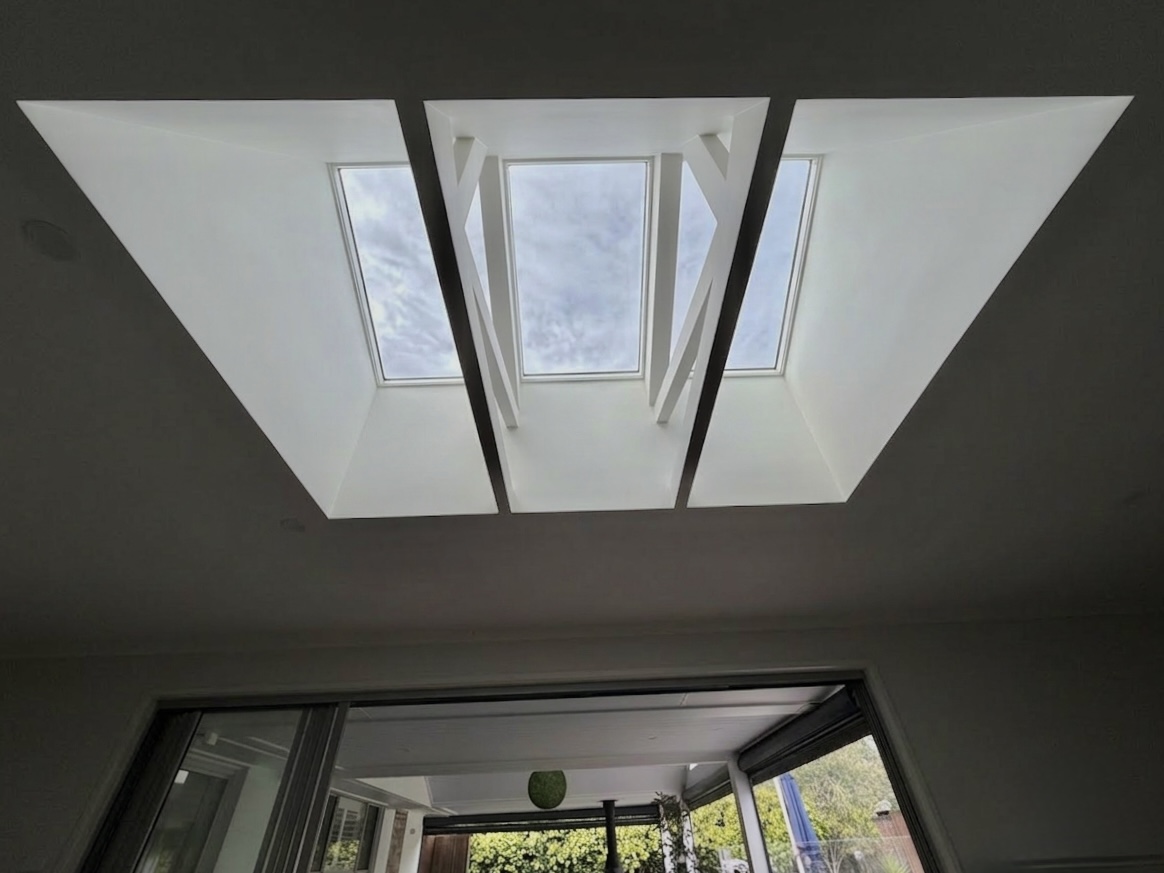
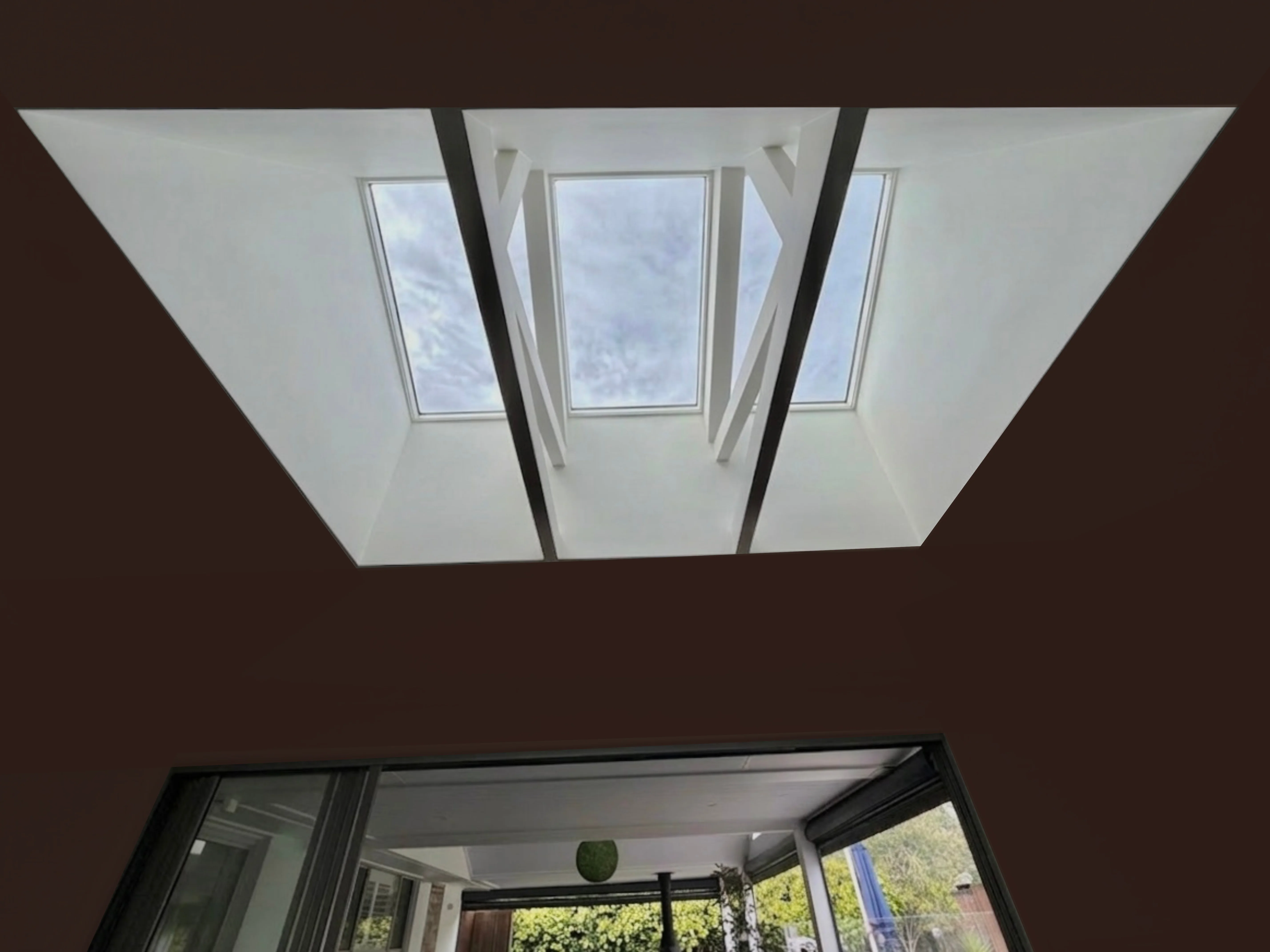
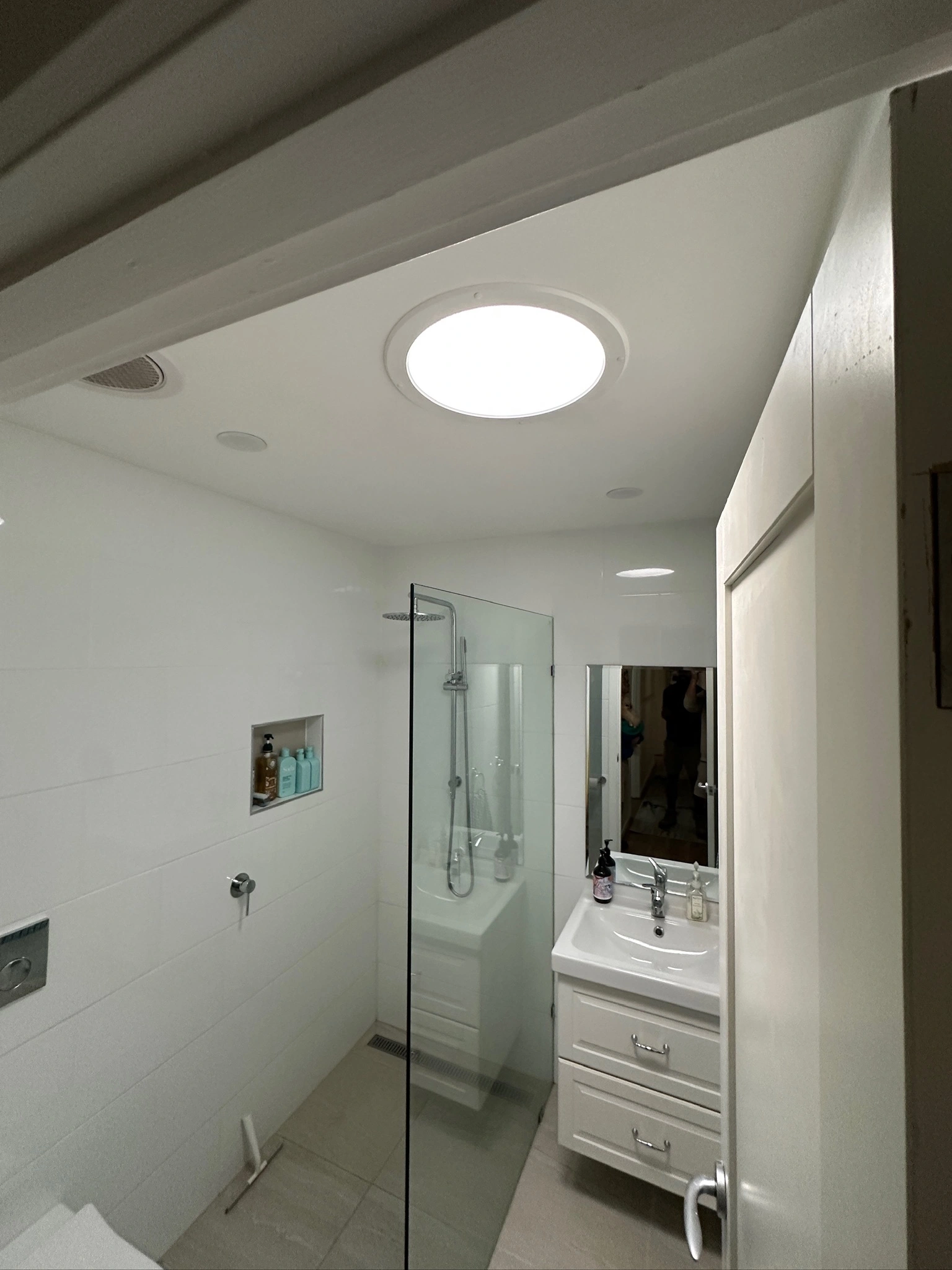
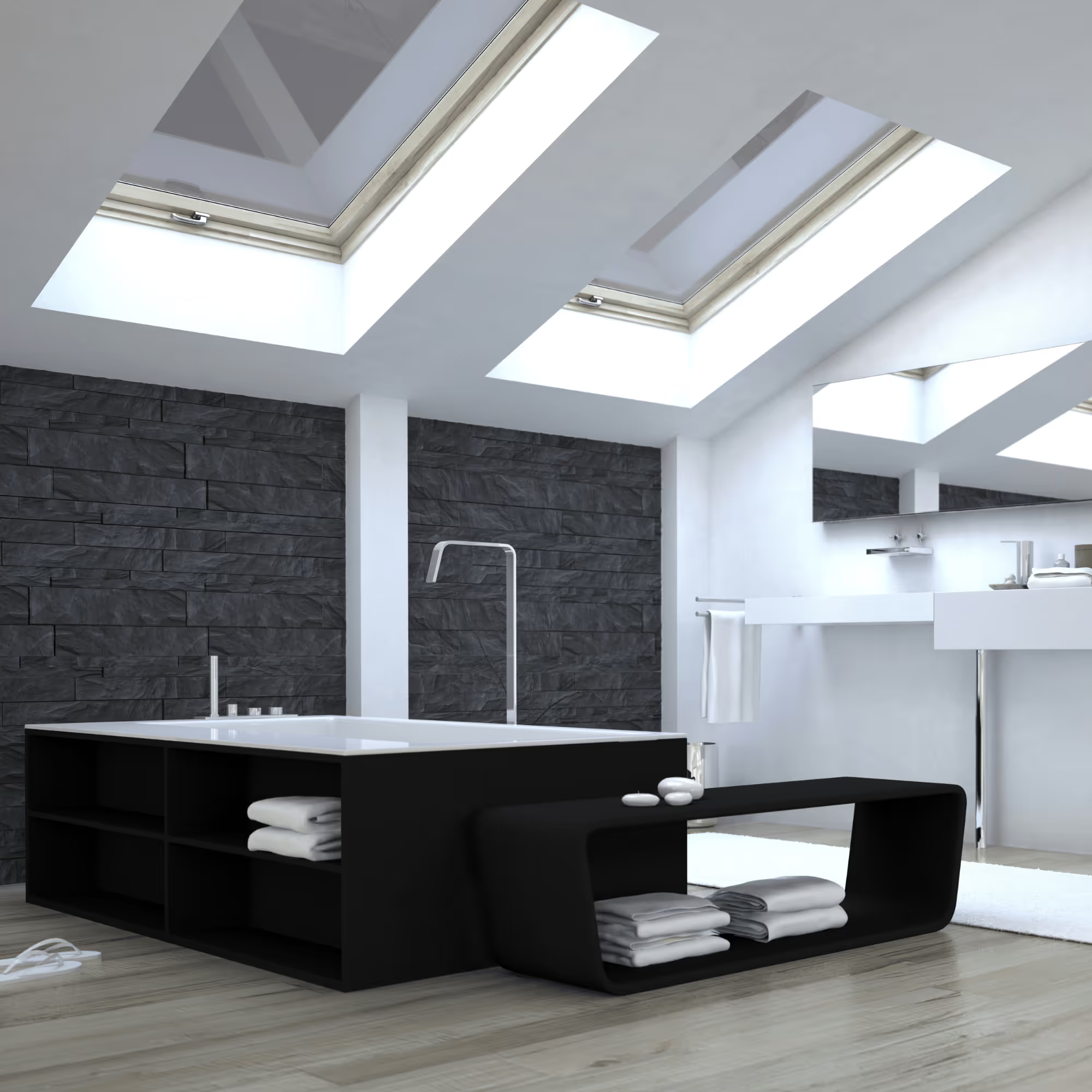
- Plasterboard Precision: The well should be flared (angled wider at the bottom) to spread light across the room.
- The Thermal Blanket: We line the exterior of the light well with high-R-value bulk insulation. This ensures the temperature inside the shaft stays consistent with your living room, preventing the "cold draught" sensation often associated with older skylights.
Phase 4: The Seamless Finish (Plastering)
The final stage is purely aesthetic but arguably the most visible.
- Square-Set Finishing: For a modern Melbourne look, we use "square-set" beads. This eliminates the need for bulky architraves, making the skylight look like a natural architectural feature of the ceiling rather than an after-thought.
Technical Precision in Flashing and Insulation: Why Specialist Repetition Matters
In the temperamental Melbourne climate where a calm morning can transform into a lashing rainstorm by mid-afternoon the philosophy of "near enough is good enough" is a recipe for architectural disaster. A skylight is only as reliable as its flashing and insulation, and achieving technical precision in these areas requires more than just a basic understanding of a manufacturer’s manual. It requires the refined, repetitive expertise of a specialist crew that navigates the quirks of local Victorian, Edwardian, and mid-century builds daily.
The Art of Bespoke Flashing
Flashing is the protective transition material that redirects water away from the skylight and onto the roof surface. While most off-the-shelf units come with standard kits, these are often designed for "ideal" conditions that rarely exist in Melbourne’s varied housing stock.
A dedicated "One-Crew" team develops a standardised "best practice" that goes beyond the basic instructions:
- Substrate Specificity: A general builder might install a skylight once or twice a year, treating a corrugated Colorbond roof the same as a brittle terracotta tile. A specialist crew understands the specific capillary action of different materials, ensuring that flashing is tucked and stepped to prevent water from being "sucked" upwards under the seals during high-wind events.
- Pitch and Profile Adjustment: The pitch of a roof significantly alters how water flows around an obstruction. Specialists adjust the "soaker" and "apron" flashing to account for the unique drainage patterns of steep Victorian gables or the shallow pitches of mid-century lean-tos.
Insulation: The Invisible Guard
Precision isn't just about keeping water out; it’s about keeping energy in. In the Melbourne latitudes, an uninsulated skylight shaft acts as a thermal "chimney." During winter, your expensive heating rises into the shaft and escapes through the glass; in summer, the shaft becomes a heat trap.
Technical precision in insulation involves:
- Eliminating Thermal Gaps: A specialist crew ensures there is no "thermal bridge" between the roof structure and the internal plasterboard. This requires meticulously wrapping the light well in high-performance insulation batts before the plaster is even hung.
- Condensation Control: If the insulation is incorrectly placed, warm indoor air hits the cold underside of the roof cladding, causing "attic rain" (condensation) that rots timber and breeds mould. Precision in sealing the vapour barrier is what separates a professional installation from a DIY-standard job.
By choosing a team that performs these specific tasks hundreds of times a year, you are investing in a proven system where the margin for error is virtually non-existent.
Read next
More from our guides
.png)
.png)