How to Bring More Natural Light into Your Melbourne Home with a Skylight

If you've been living with artificial lights switched on at noon, you're not alone. Many Melbourne homes particularly older weatherboard and brick properties, were built before natural light was a design priority. The good news: you don't need to renovate your entire home to fix it. A professionally installed skylight can transform a dark space into a sun-drenched room in a matter of hours.
In this guide, we'll walk through everything you need to know: which types of skylights suit Melbourne's climate, how much installation costs, and what to look for in a qualified installer.

Why Natural Light Matters More Than You Think
Natural light isn't just an aesthetic preference; it affects your wellbeing, energy bills, and how your home feels to live in. Studies consistently link sunlit interiors with improved mood, better sleep, and reduced reliance on artificial lighting. In Melbourne's temperate climate, a skylight can harvest useful daylight for 10–12 months of the year.
From an energy perspective, less artificial lighting means a lower electricity bill. Combined with the thermally broken double glazing standard on modern Velux skylights, you also reduce heat gain in summer and heat loss in winter.
Pro tip: A 550 × 980 mm skylight in a 12 m² room can eliminate the need for overhead lighting during all daylight hours. That's a meaningful reduction in your quarterly electricity costs
Which Type of Skylight Is Right for Your Home?
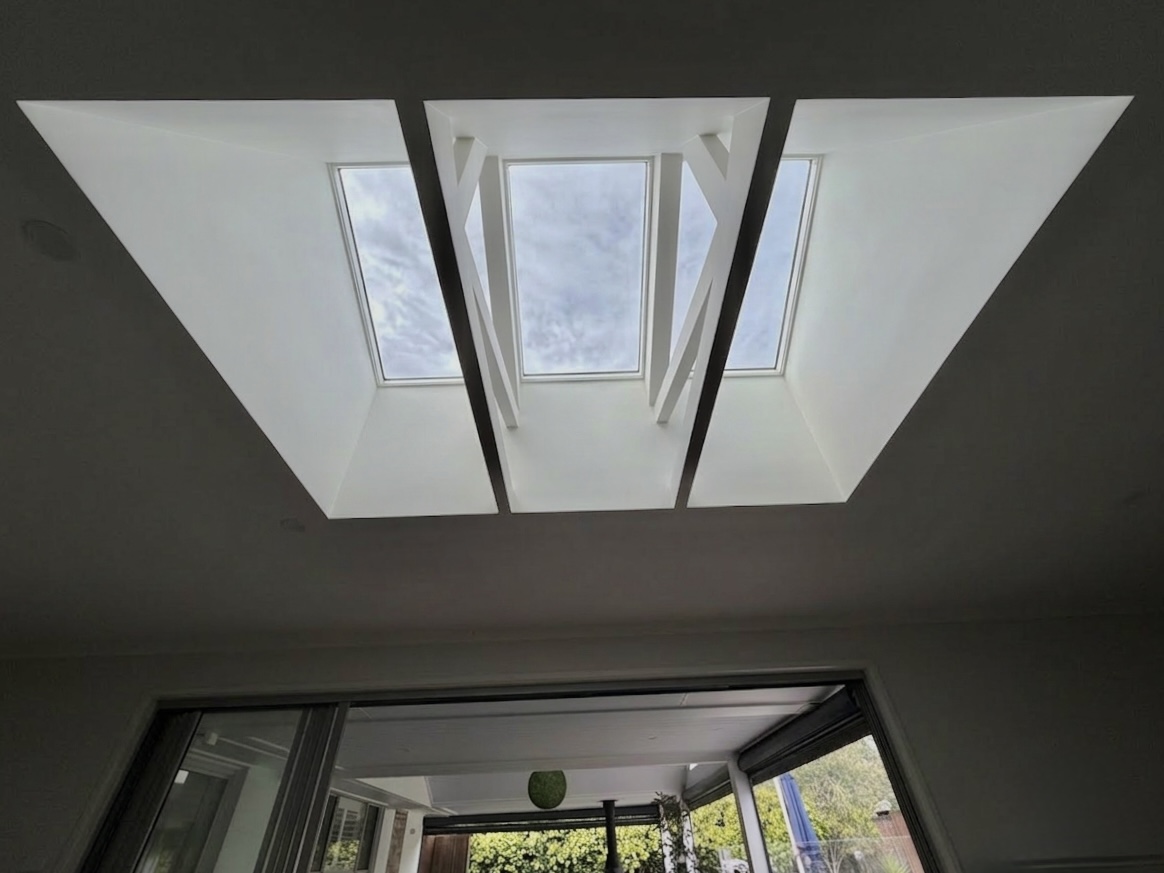
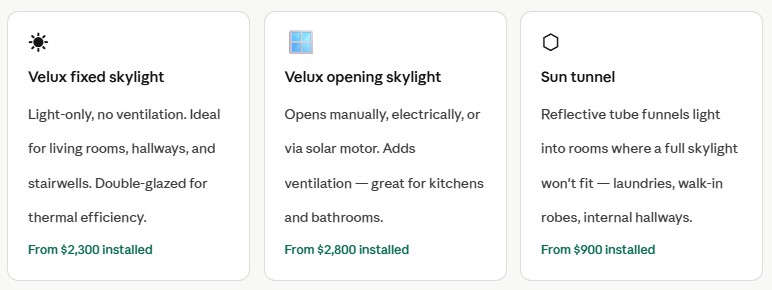
Not all skylights are created equal. The right choice depends on your roof pitch, the room below, your budget, and whether you want ventilation as well as light. Here's an overview of the main options:
Melbourne's Climate: What You Need to Know Before Installing
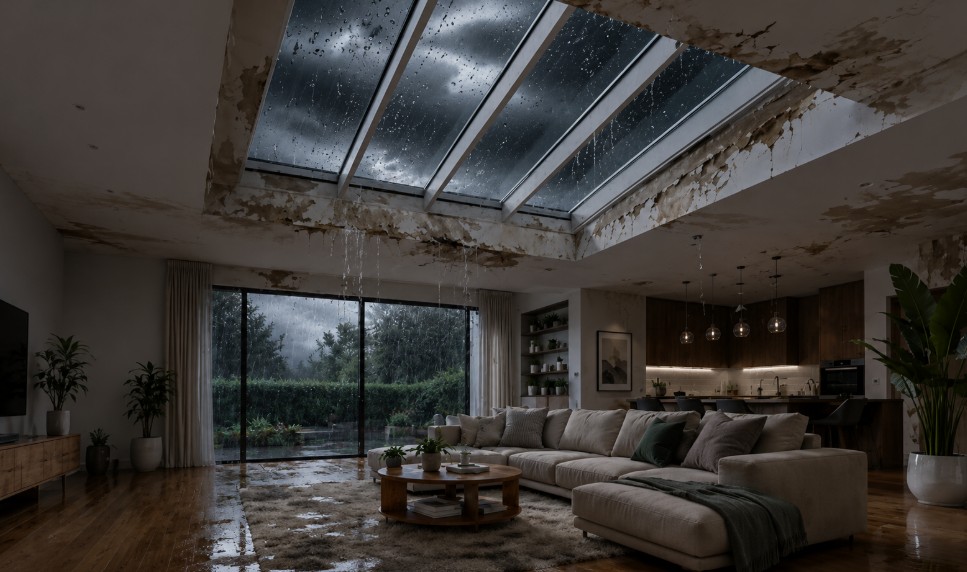
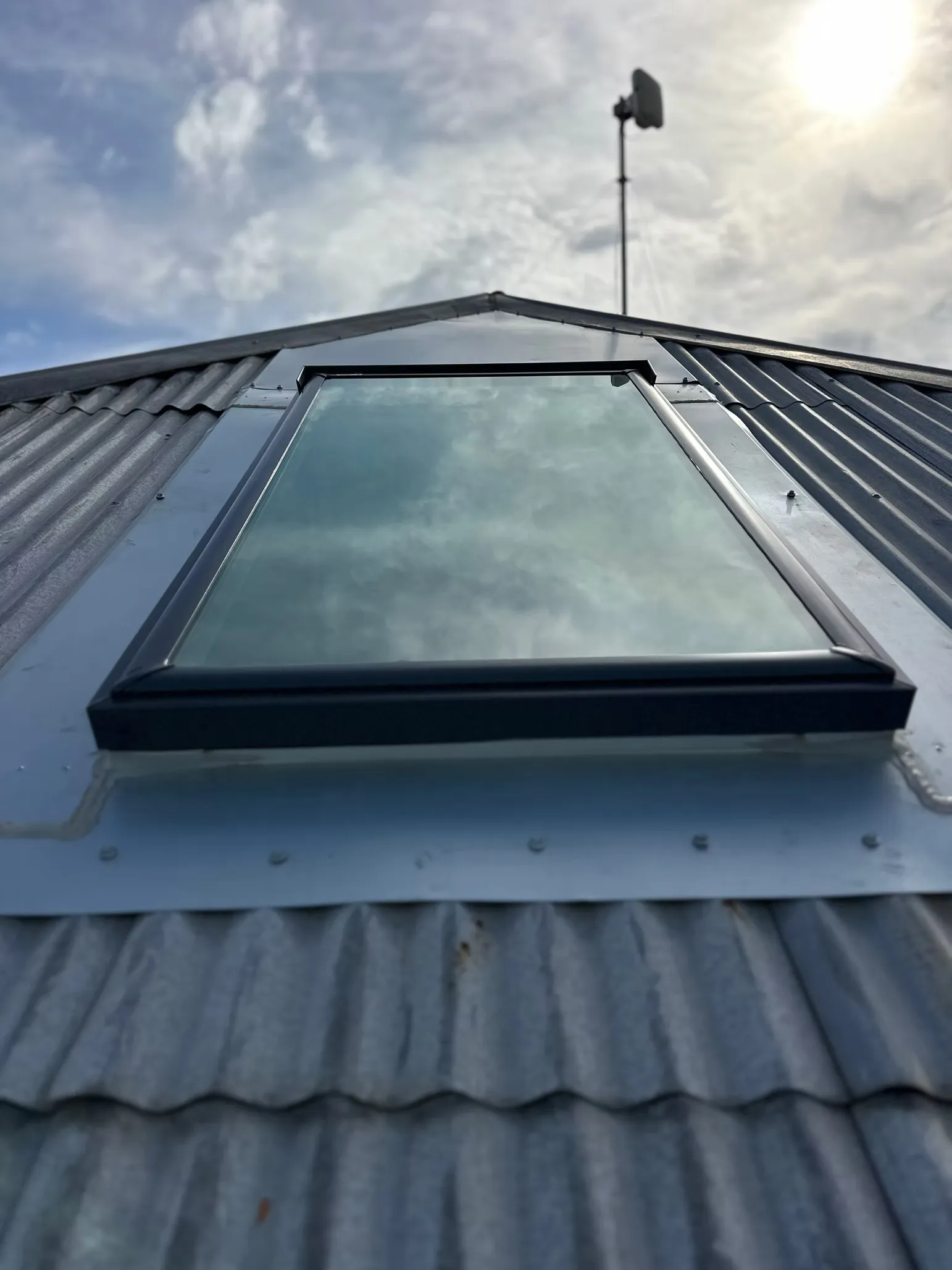
Melbourne is notorious for "four seasons in one day", which makes weatherproofing non-negotiable. A skylight installed without proper flashing and framing will leak, often not immediately, but within the first heavy storm season. Proper installation means:
- Velux-certified flashing kits matched to your exact roof material (tile, Colorbond, slate)
- Structural framing of the ceiling opening to meet NCC (National Construction Code) requirements
- Thermal break between glass and frame to prevent condensation in Melbourne winters
- Proper finishing plasterboard, cornices, stopping, and painting to a residential standard
This is why it pays to use a single contractor who handles the full scope. When roofing, carpentry, and plastering are split across three different tradies, accountability for leaks becomes murky. A specialist installer who does it all in-house means there's one clear point of responsibility if anything goes wrong.
Most Common Rooms Melbourne Homeowners Choose for Skylights
Bathrooms
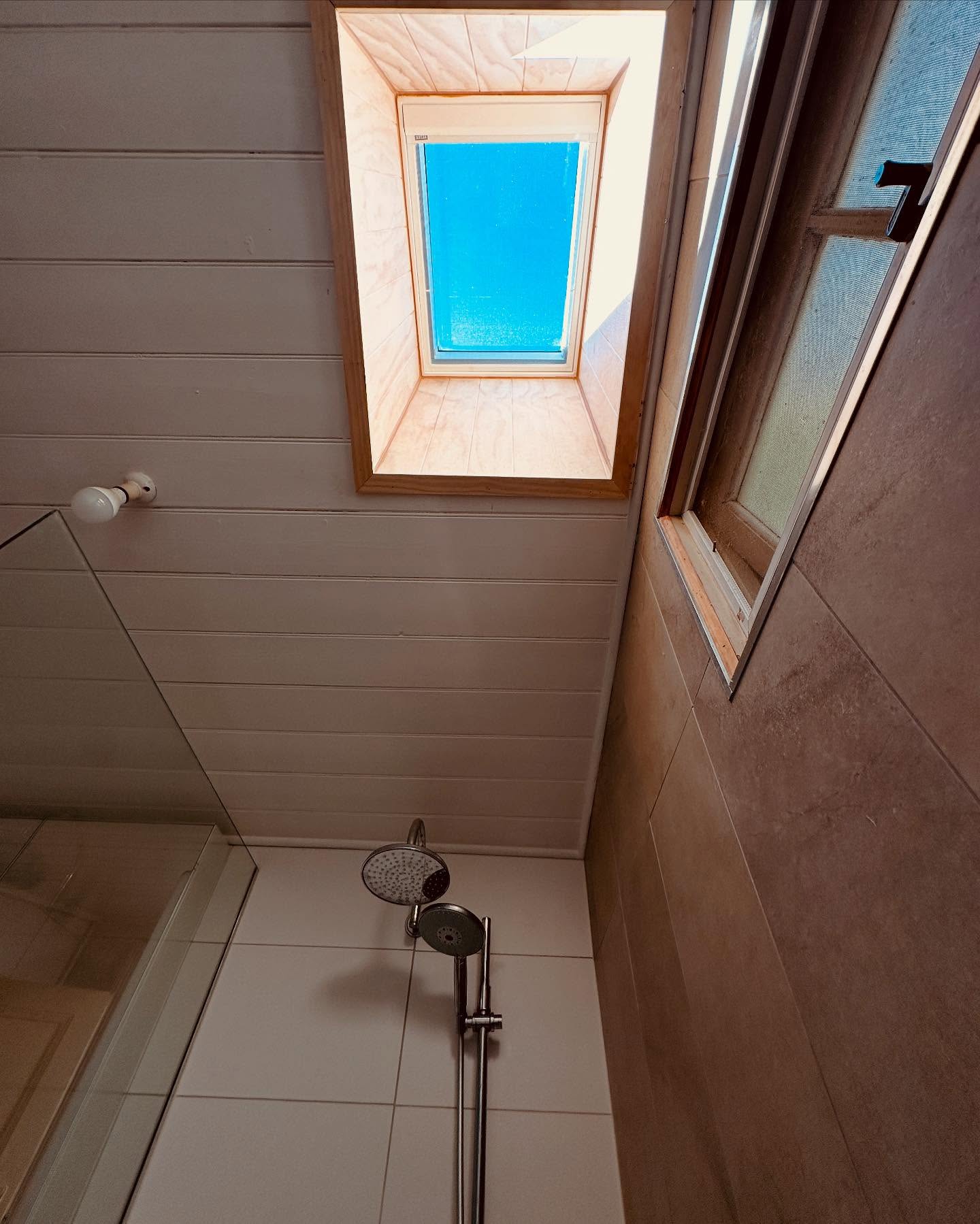
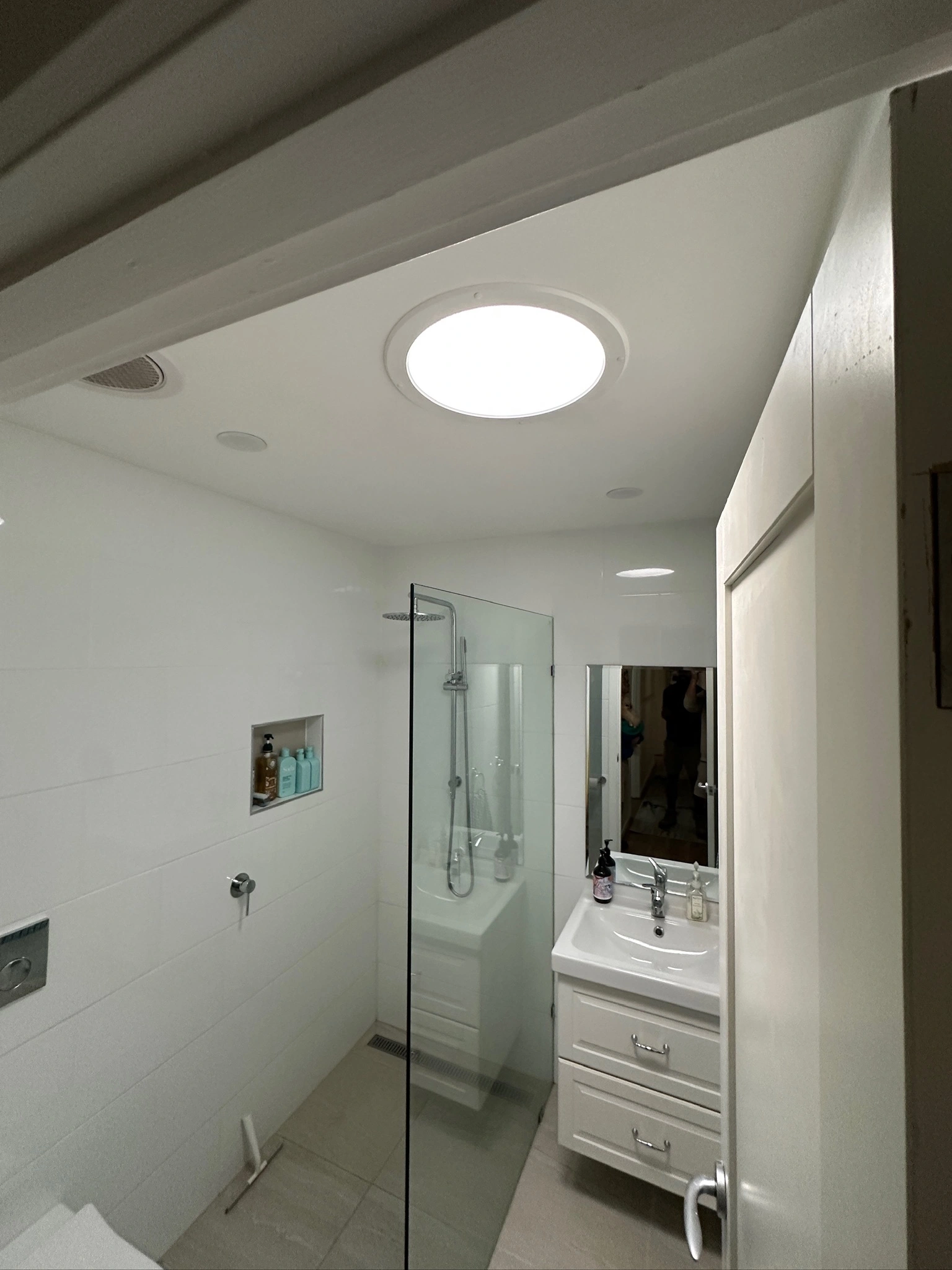
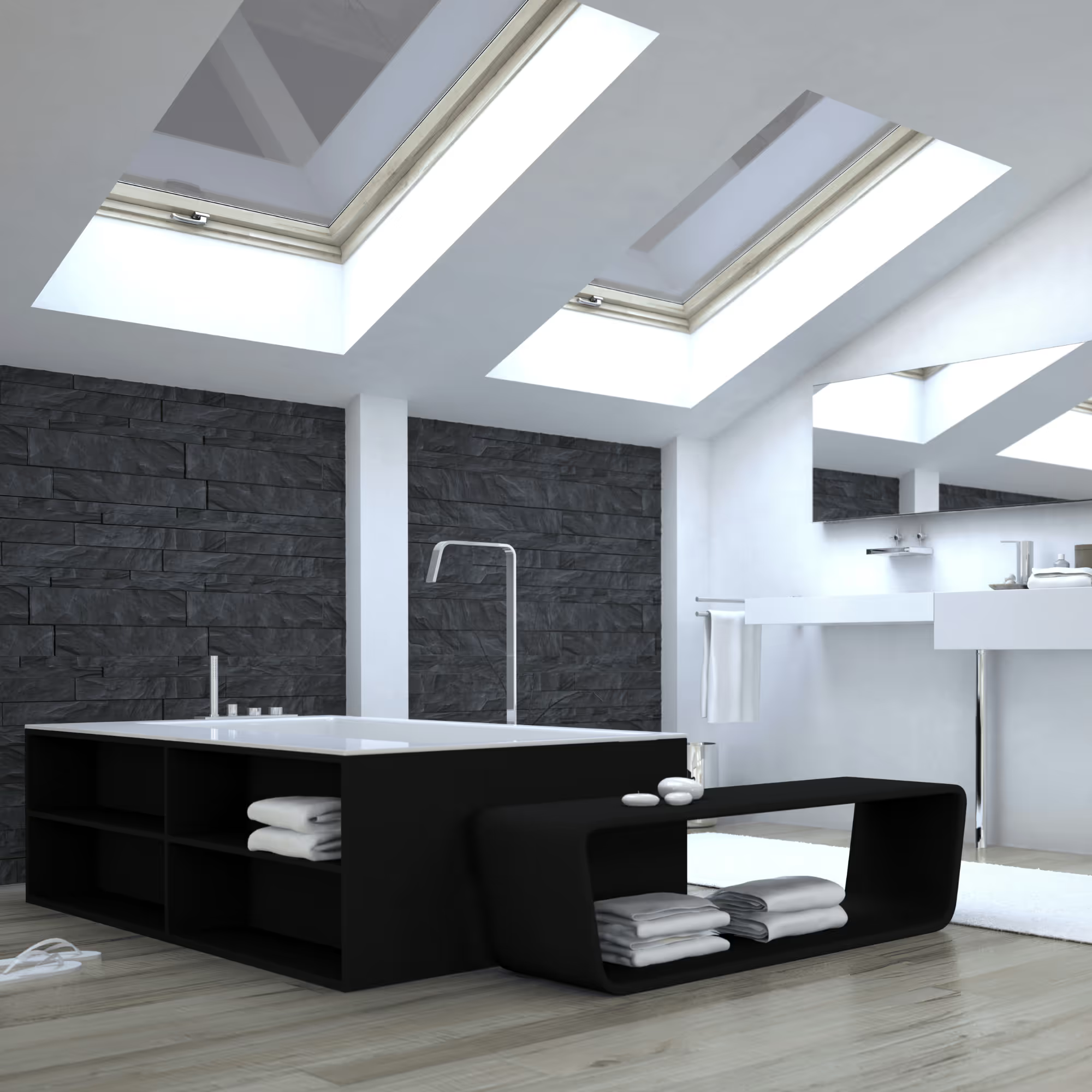
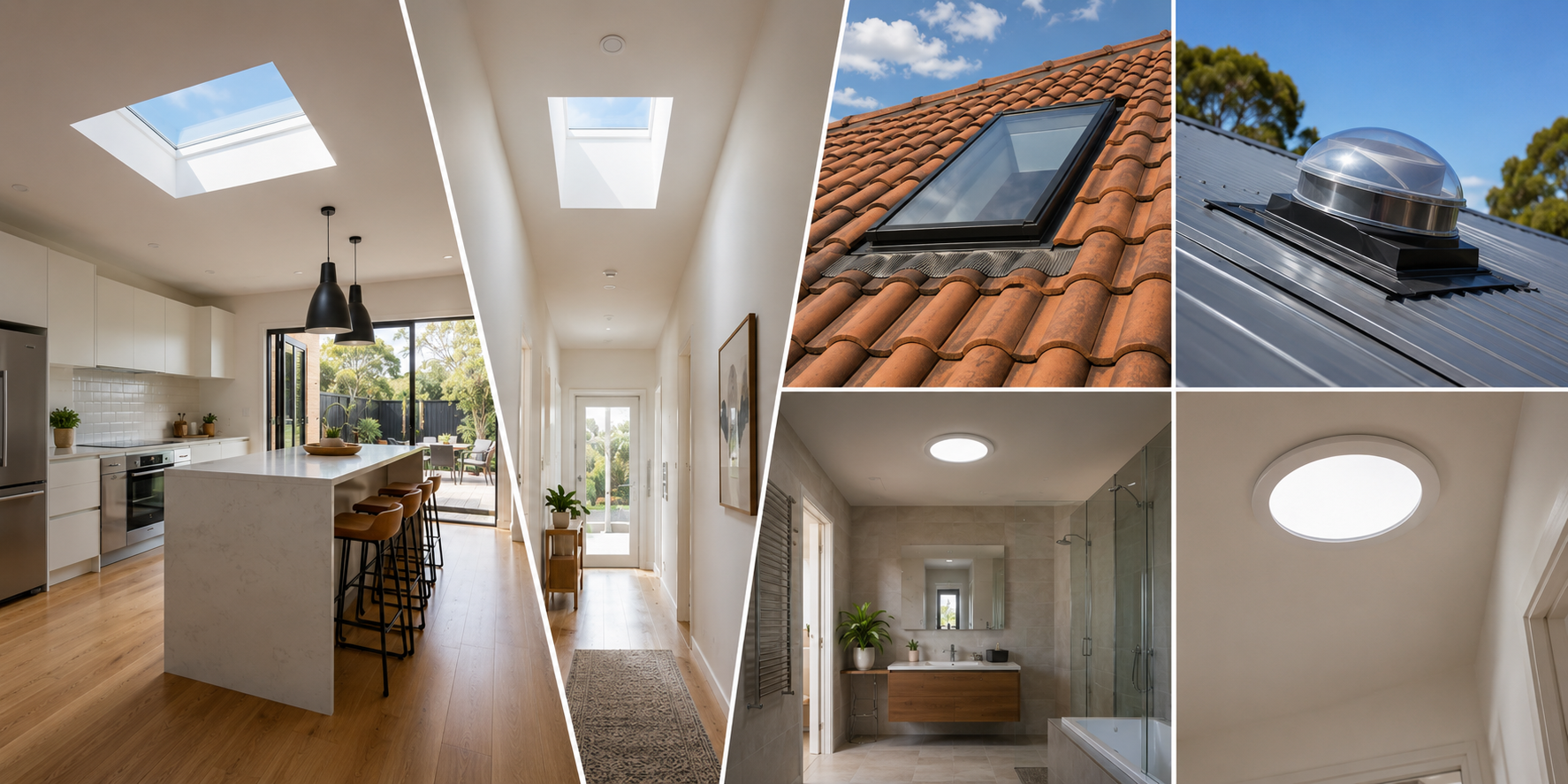
A bathroom skylight is one of the most popular upgrades in Melbourne. They eliminate the need for an exhaust fan (if the skylight opens), reduce moisture-related mould risk, and turn what's often the darkest room in the house into something spa-like. A frosted or obscured glass option provides full privacy while still flooding the room with light.
Kitchens and dining areas
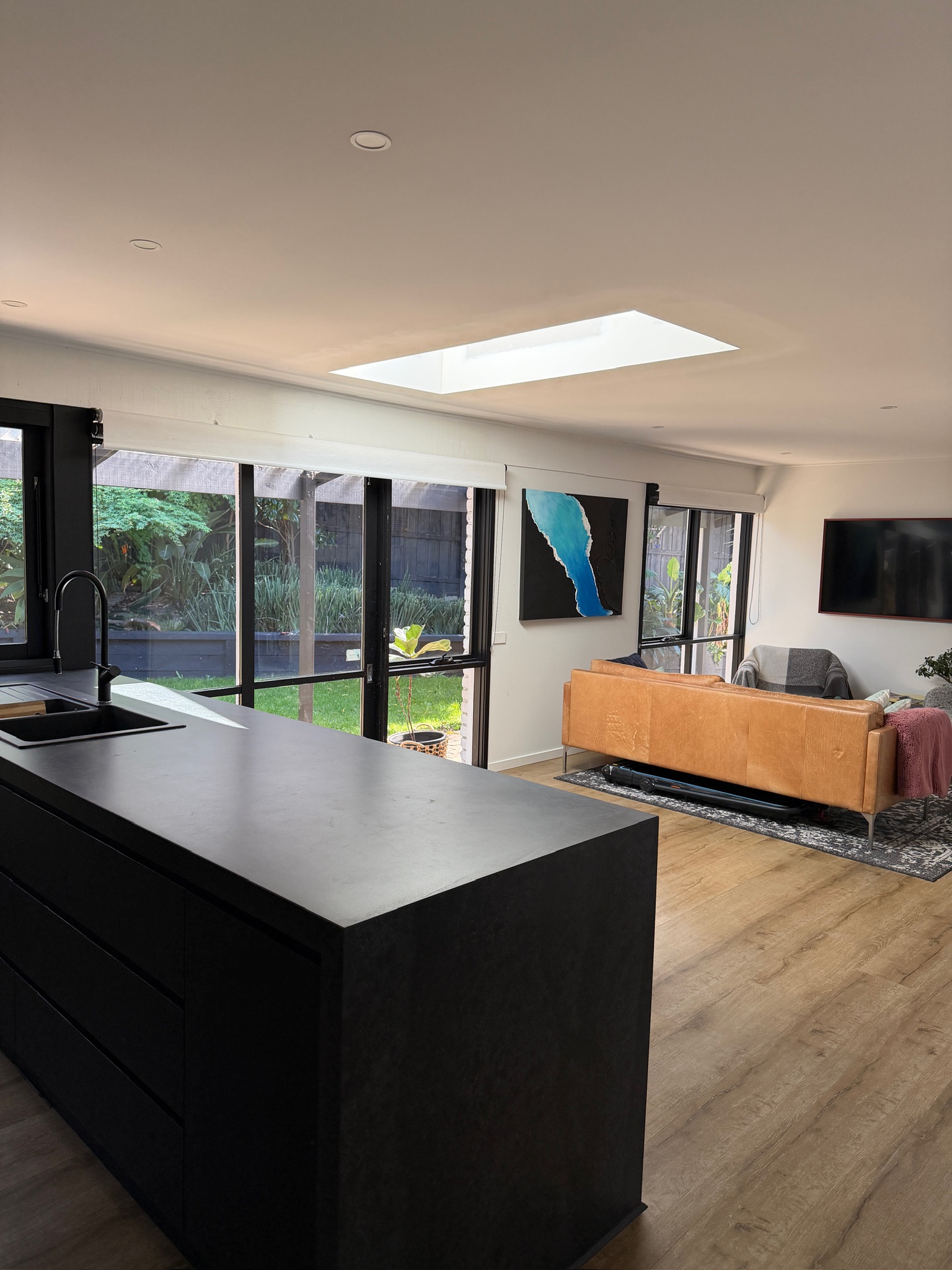
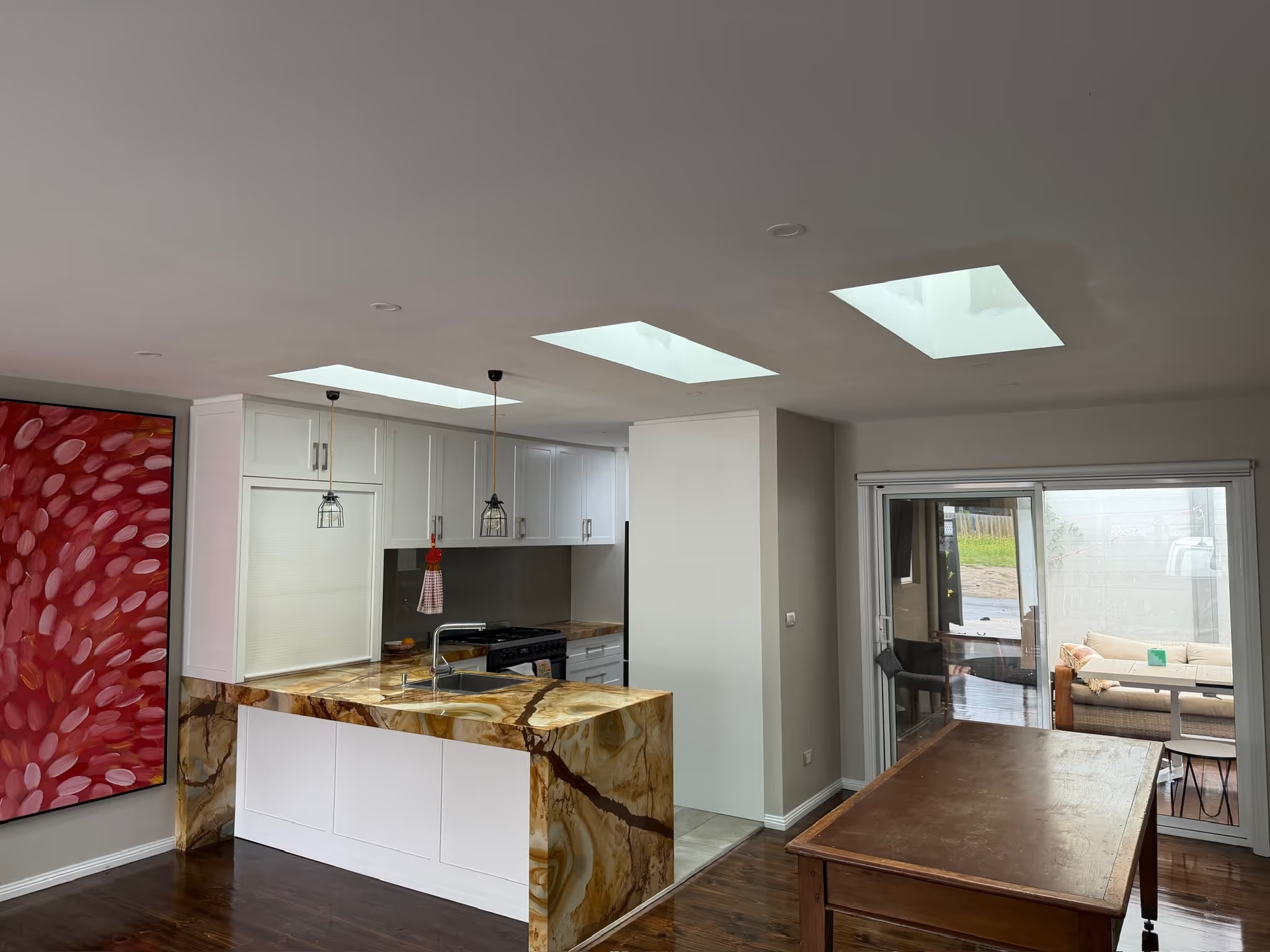
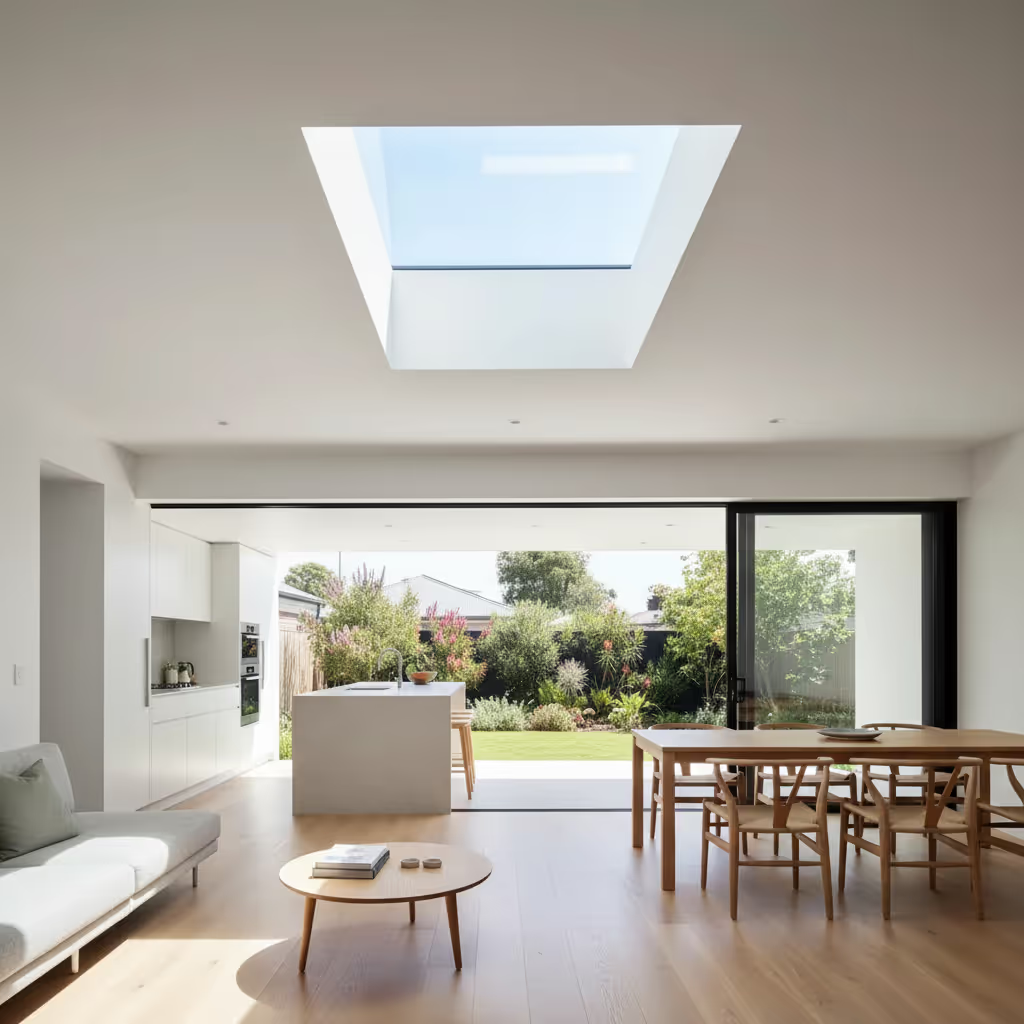
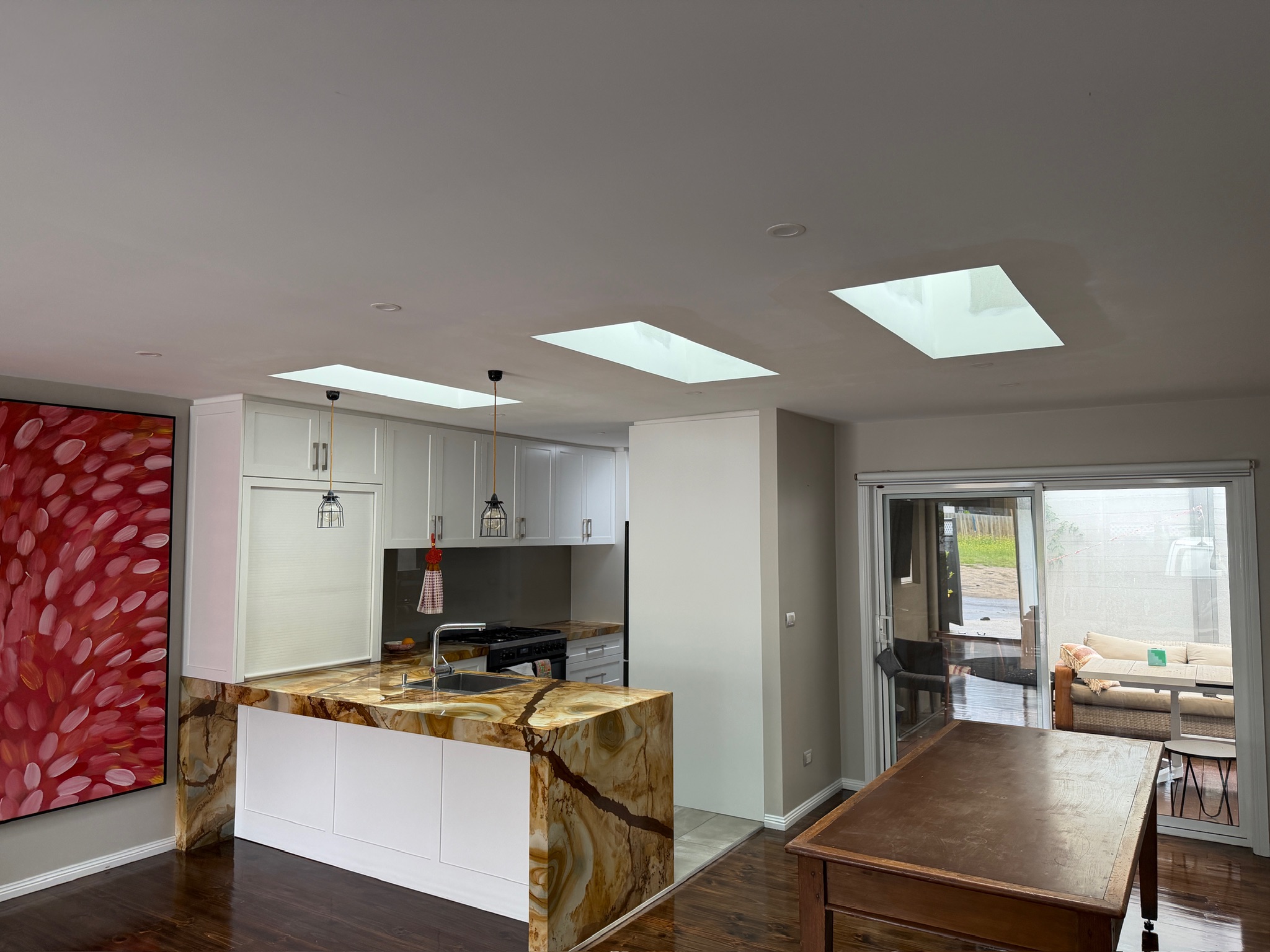
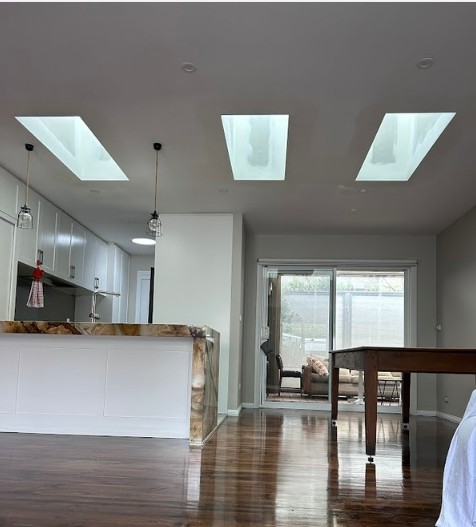
Galley kitchens and open-plan dining areas that face south or are boxed in by neighbouring properties benefit enormously from overhead light. A skylight above an island bench or dining table becomes an architectural focal point as well as a functional improvement.
Hallways and stairwells
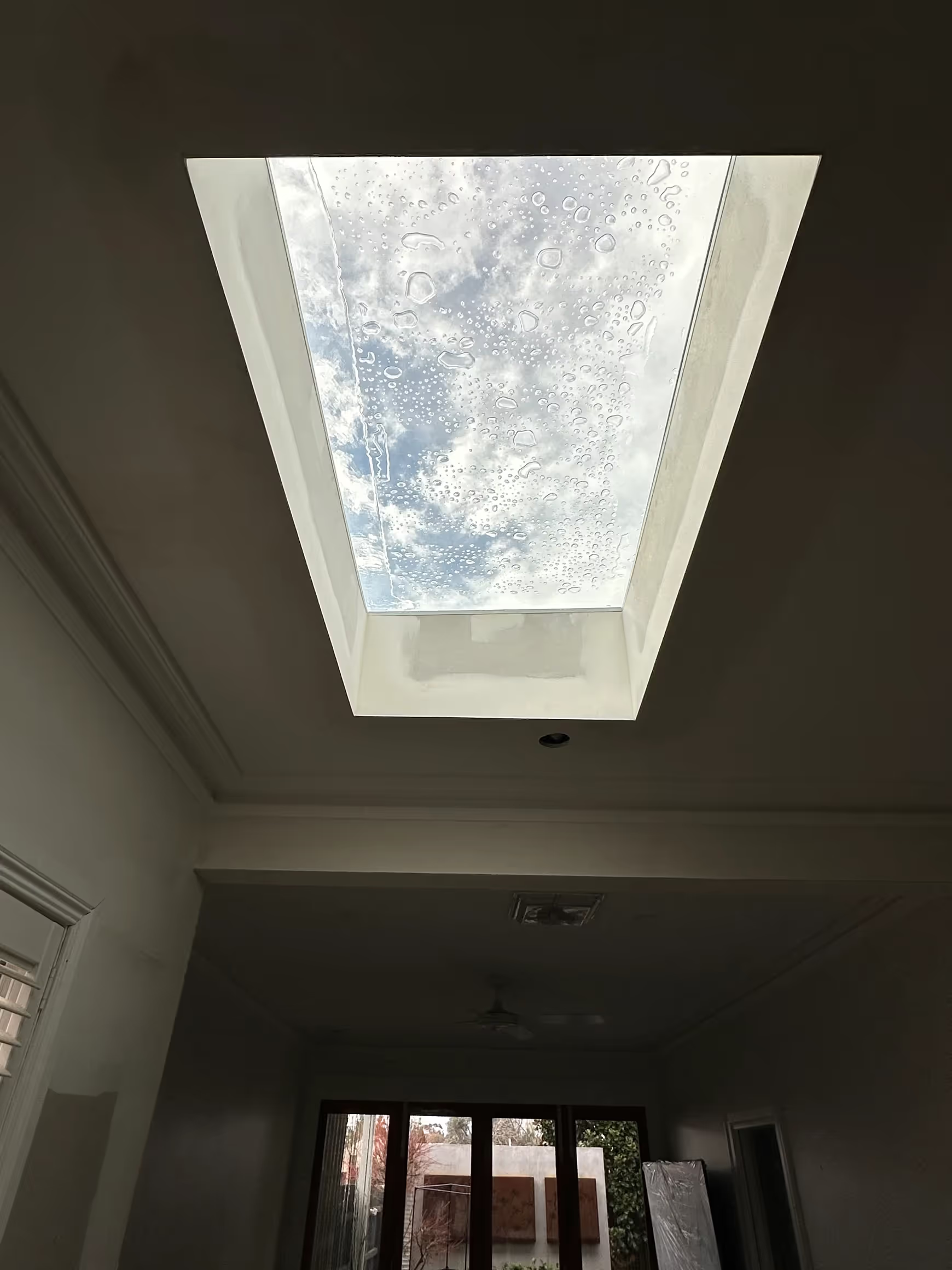
Internal corridors are typically the darkest areas in any home. A sun tunnel or fixed skylight above a hallway can eliminate the need for permanent artificial lighting and make the home feel larger and more welcoming. This is also one of the more affordable options, as structural complexity is low.
Living rooms and studies
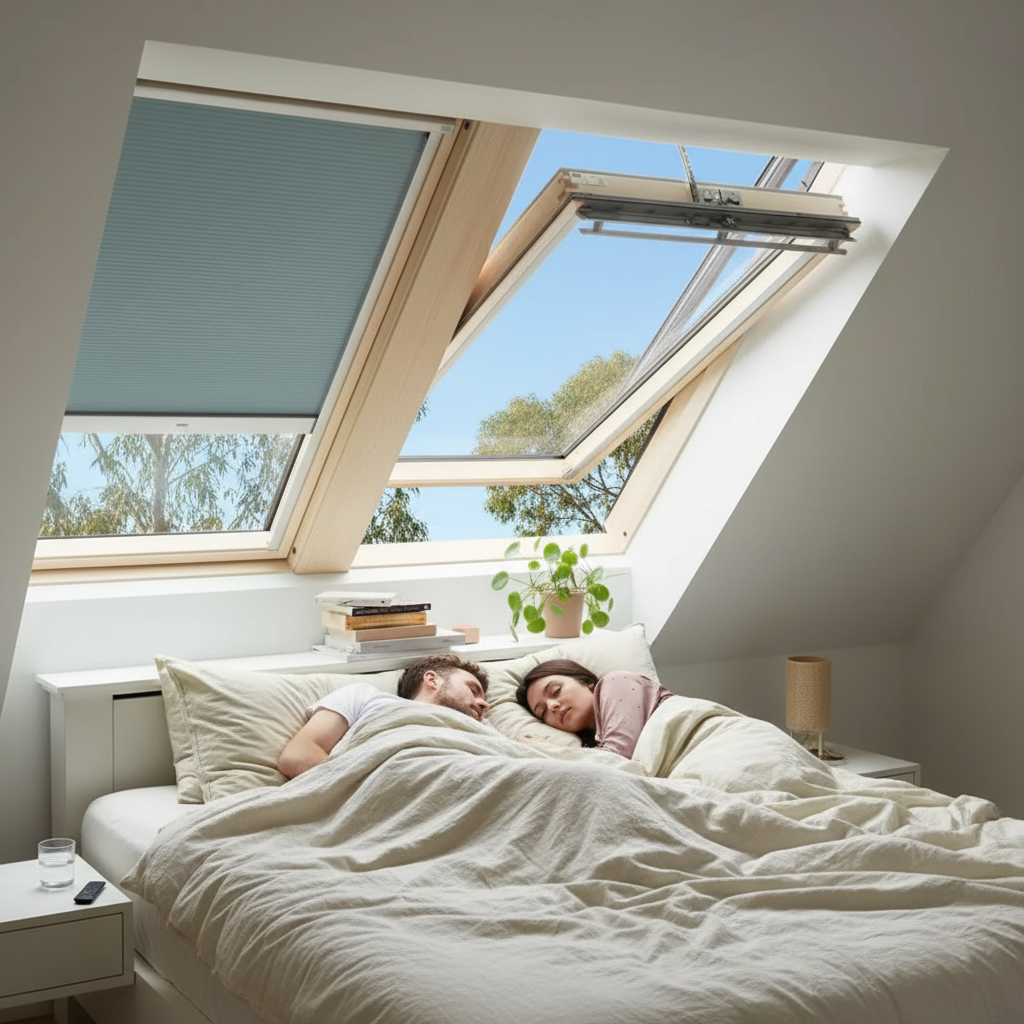
North-facing living rooms often already have good light, but south-facing or overshadowed rooms can feel dim even on a clear Melbourne day. An opening skylight here adds ventilation as well as light useful in Melbourne's shoulder seasons when temperatures are mild but fresh air is welcome.
Good to know: Velux opening skylights can be fitted with rain sensors that automatically close the window when moisture is detected important for Melbourne's unpredictable weather. Smart home integration is also available for newer models.
How Much Does Skylight Installation Cost in Melbourne?
Cost is typically the first question homeowners ask, and the answer depends on the skylight type, your roof material, whether scaffolding is needed, and the finishing work required. As a general guide for Melbourne installations:
- Sun tunnels: $900 – $1,600 (2–5 hour install)
- Velux fixed skylights: from $2,300 (full day, includes plastering and finishing)
- Velux opening skylights: from $2,800 (electric/solar models cost more)
- Complex or double-storey jobs: price on application (scaffolding adds to cost and time)
These prices cover the complete job: the skylight unit, flashing kit, structural carpentry, plasterboard, stopping, and cleanup. When comparing quotes, make sure each quote covers the same scope. Some installers quote only the skylight unit and exclude all the finishing work, leading to unexpected costs later.
What to Look for in a Melbourne Skylight Installer
Not every builder or roofer has the specialist knowledge to install a skylight correctly. Here's what separates a qualified installer from a general handyman:
- Velux-certified installer status (verifiable with Velux Australia)
- Demonstrated experience with your specific roof type
- Full scope capability: carpentry, roofing, plastering without subcontracting
- A clear, itemised quote that includes all finishing work
- A written weather-tight guarantee on their workmanship
- Compliance with NCC (Australian Building Code) requirements
Ask for photos of completed jobs and, if possible, speak to previous clients in your suburb. A good installer will welcome this kind of due diligence.
Ready to brighten your Melbourne home?
Luminous Skylights provides free on-site quotes across all Melbourne suburbs, from Bayside to the Mornington Peninsula and everywhere in between.
Frequently Asked Questions
Will a skylight make my home hotter in summer?
Modern double-glazed Velux skylights with low-e coatings significantly reduce heat gain compared to older single-pane models. External blinds available as an add-on provide additional shading control. Opening skylights also allow hot air to vent from the ceiling space, which can actually help cool a room on Melbourne's warm evenings.
Do skylights require council approval in Melbourne?
Most residential skylight installations fall under exempt development provisions and don't require a planning permit. However, if your property is heritage-listed or in a bushfire zone, additional requirements may apply. A qualified installer should confirm this during their site assessment.
How long do skylights last?
Velux skylights are engineered to last 20+ years with minimal maintenance. The seals and flashing, when installed correctly, should outlast the product itself. If you're getting leaks in an older skylight, it's usually an installation or flashing failure rather than a product issue.
Can a skylight be installed in a flat roof?
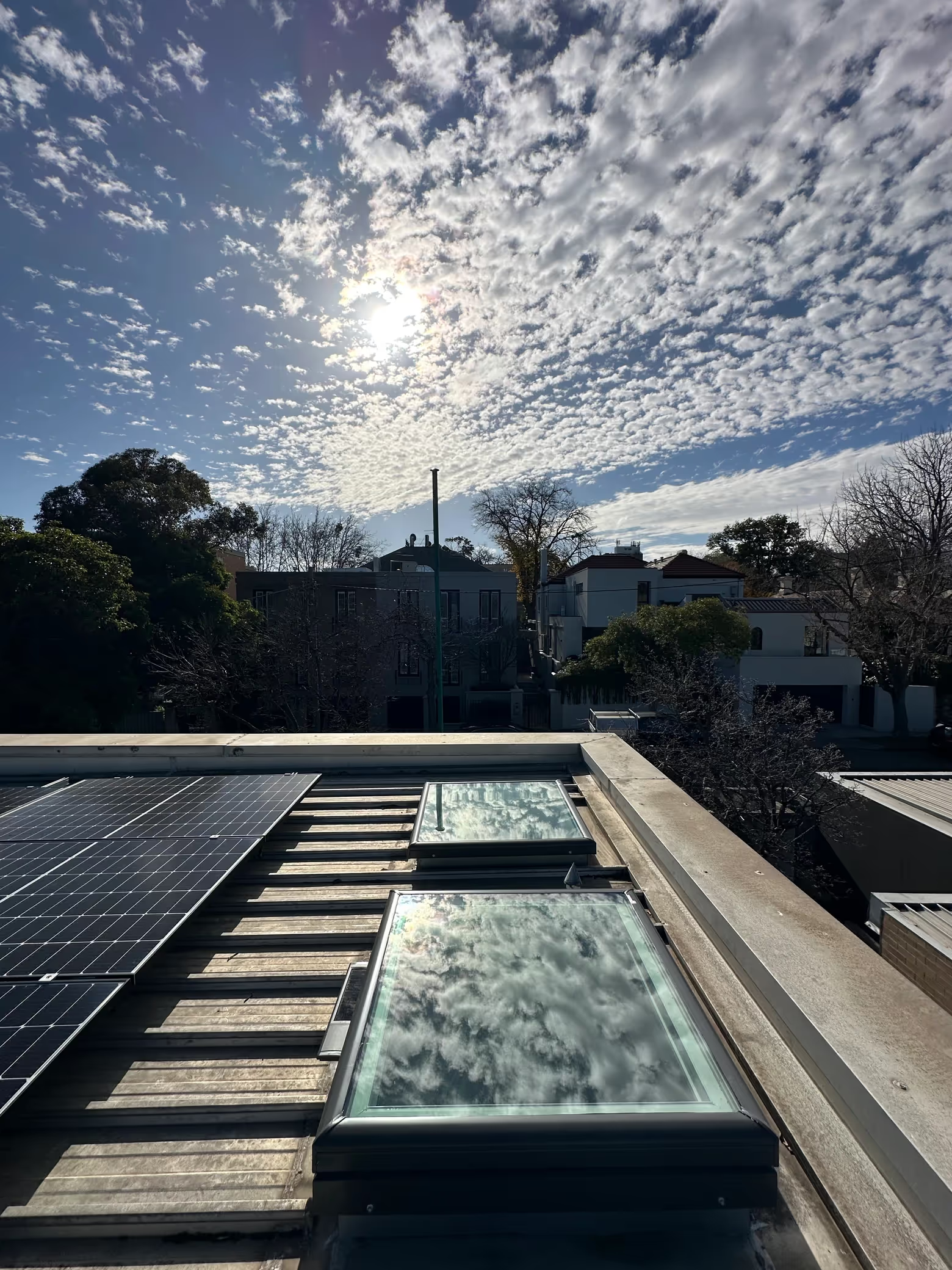
Yes. Velux makes specific models designed for low-pitch and flat-roof applications. These use a different flashing system and often a raised kerb to prevent water pooling. Your installer should specify the correct product for your roof pitch during the quoting stage.
What's the difference between a sun tunnel and a skylight?
A sun tunnel (also called a light tube or solar tube) routes light from a small rooftop dome through a reflective tube to a diffuser in your ceiling. It's less expensive, requires no structural work, and can reach rooms far below the roof. A skylight is a larger glazed opening that provides more light, better views of the sky, and (if opening) ventilation. The right choice depends on your room, your budget, and how much light you need.
Read next
More from our guides

.png)
.png)