Sunpipes Explained: The Cheaper, Faster Way to Light Up a Dark Room

.png)
A sunpipe (also known as a sun tunnel or tubular skylight) does the same basic job, pulling daylight into a room, without the structural work. It's smaller, faster to install, and usually a fraction of the cost. Here's how they actually work, how they differ from a skylight, and what to expect if you're getting one fitted.
What Is a Sunpipe, Exactly?
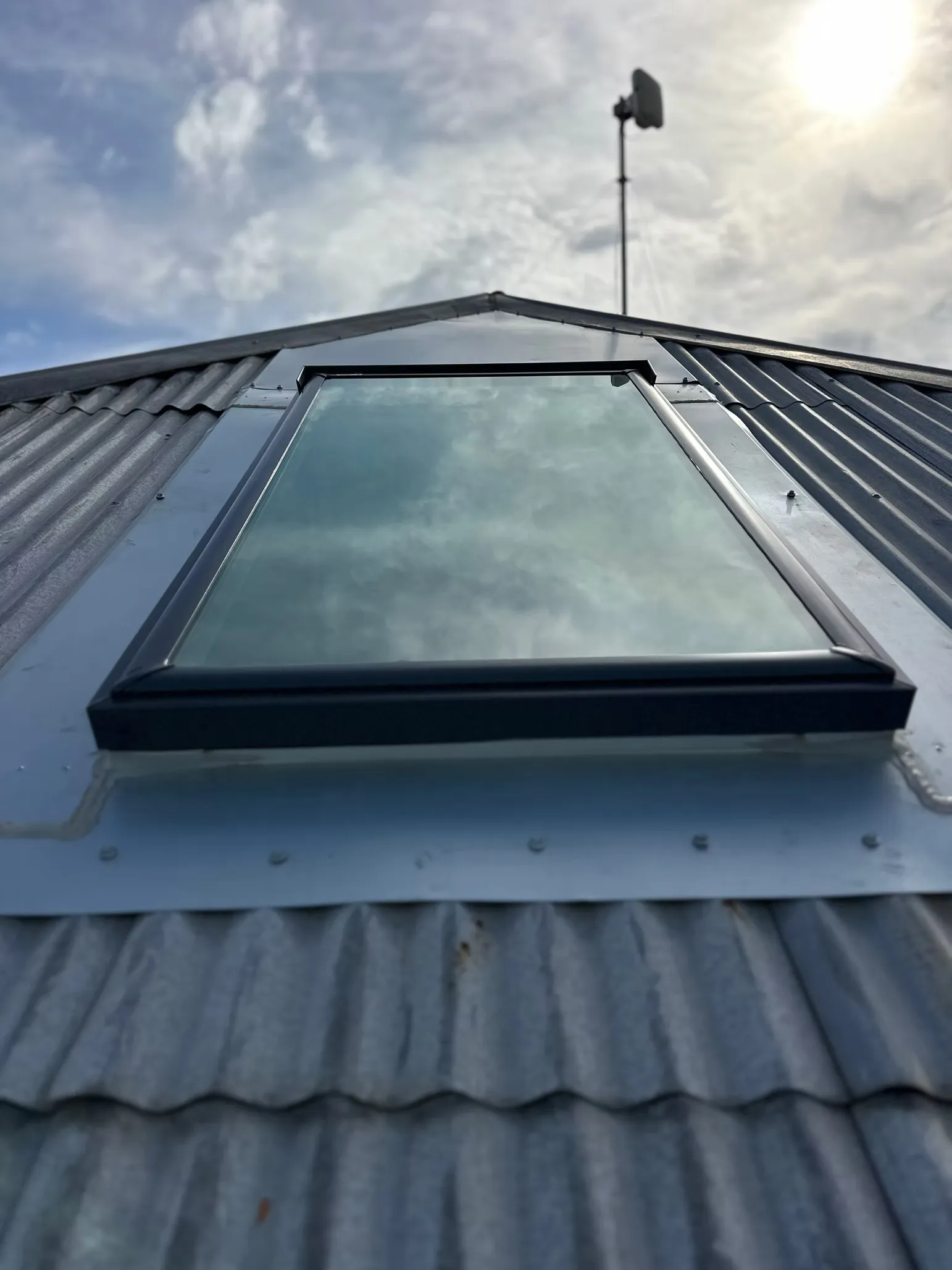
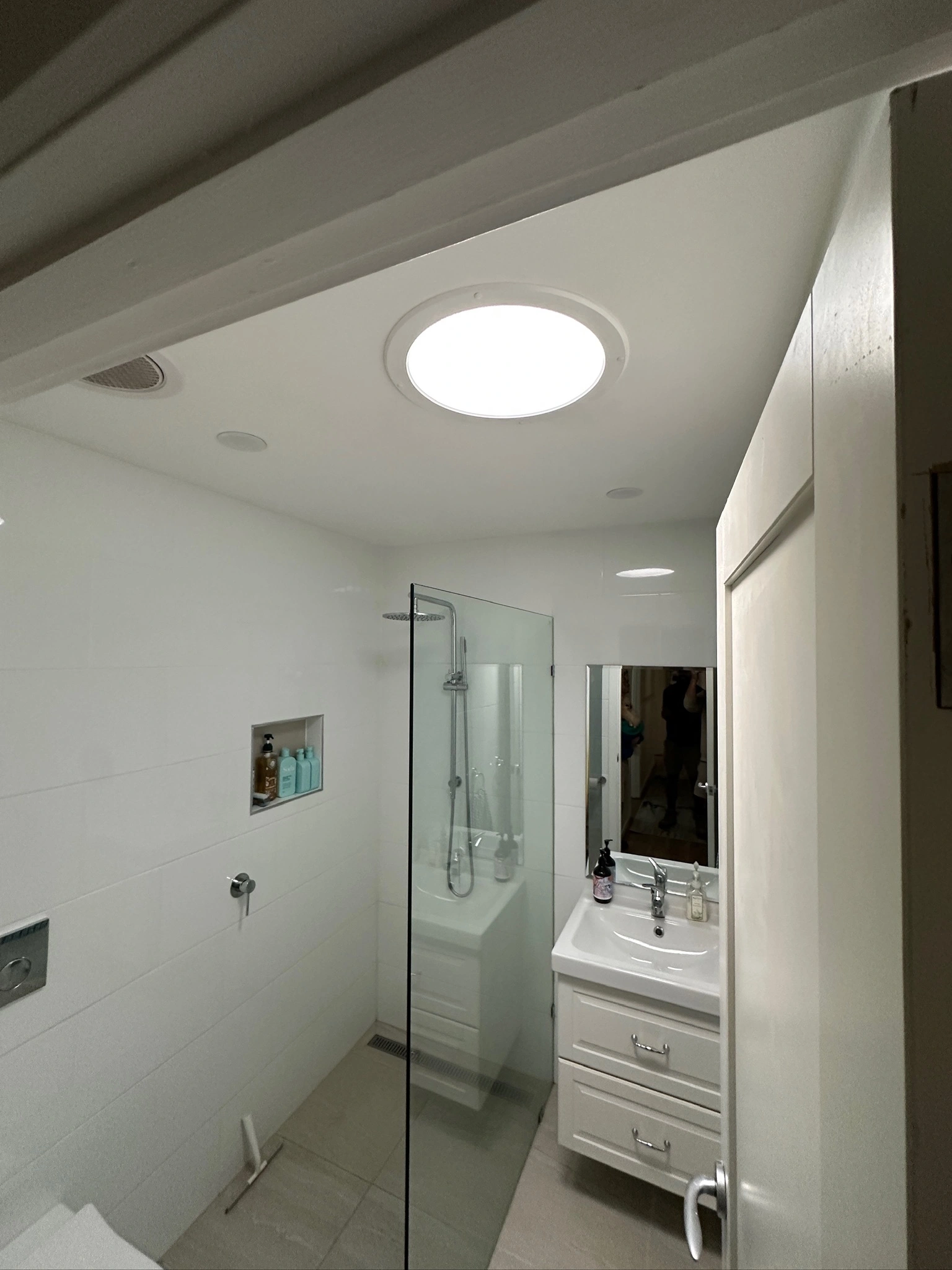
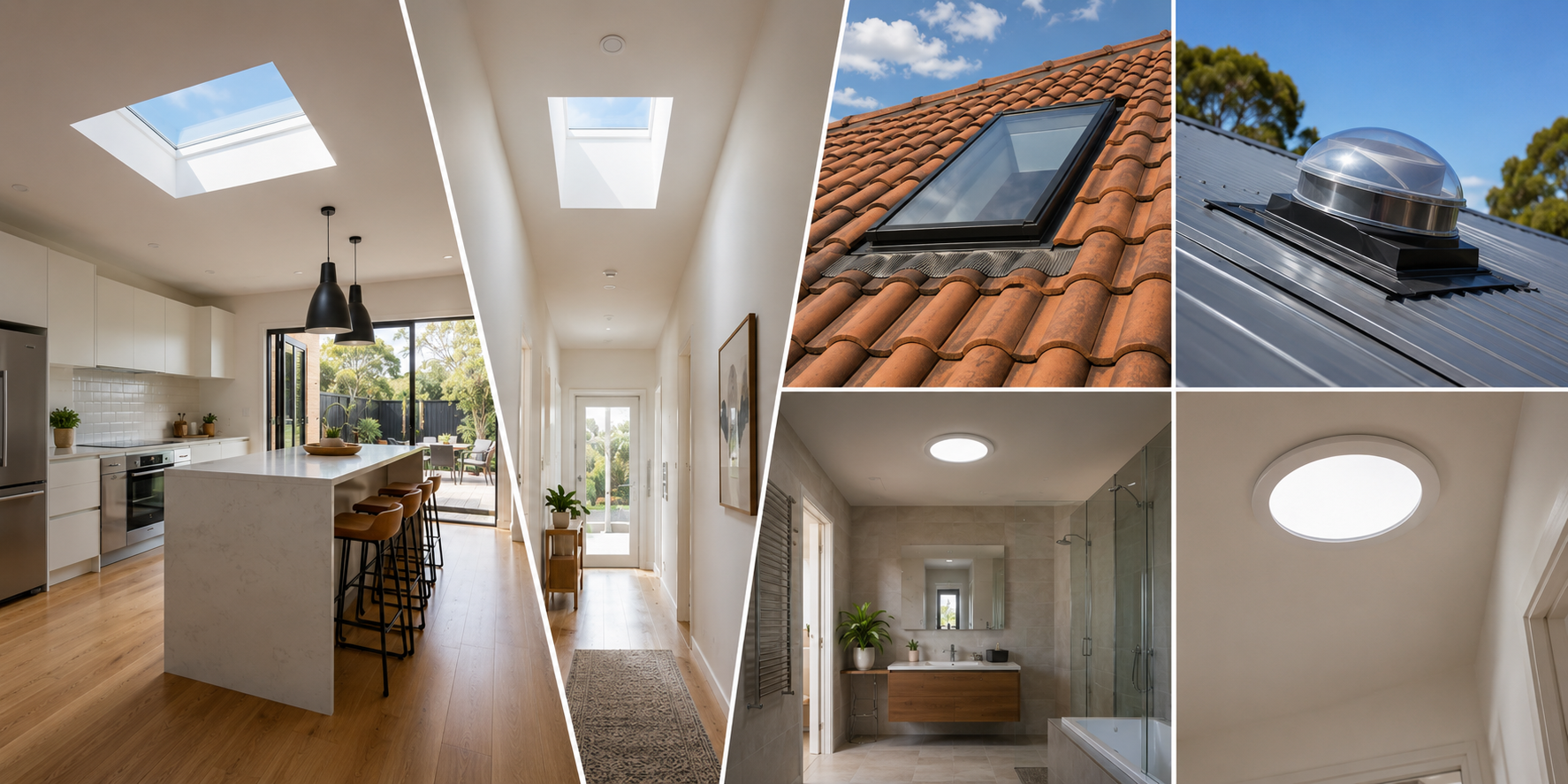
Picture a small dome on your roof connected to a round diffuser on your ceiling by a reflective tube. That's the whole system. Sunlight hits the dome, bounces down the tube, and spreads out through the diffuser into the room below. No glazed window, no visible frame, no bulky shaft eating into your ceiling cavity.
There are two types of tube:
- Rigid: a straight, fixed reflective tube. Only works when the roof and ceiling openings line up directly.
- Flexible: a bendable, ribbed tube that can snake around rafters, ducting, and wiring. This is what most Australian homes end up with, since a roof penetration and a ceiling penetration rarely sit on the same vertical line.
Because the flexible tube can route around obstacles instead of requiring a straight shot, installers don't need to reframe the ceiling or shift joists, which is the main reason sunpipes cost less than skylights to fit.
Sunpipe, Skylight, or Sun Tunnel: What's the Difference?
These three terms get thrown around like they're the same thing. They're not:
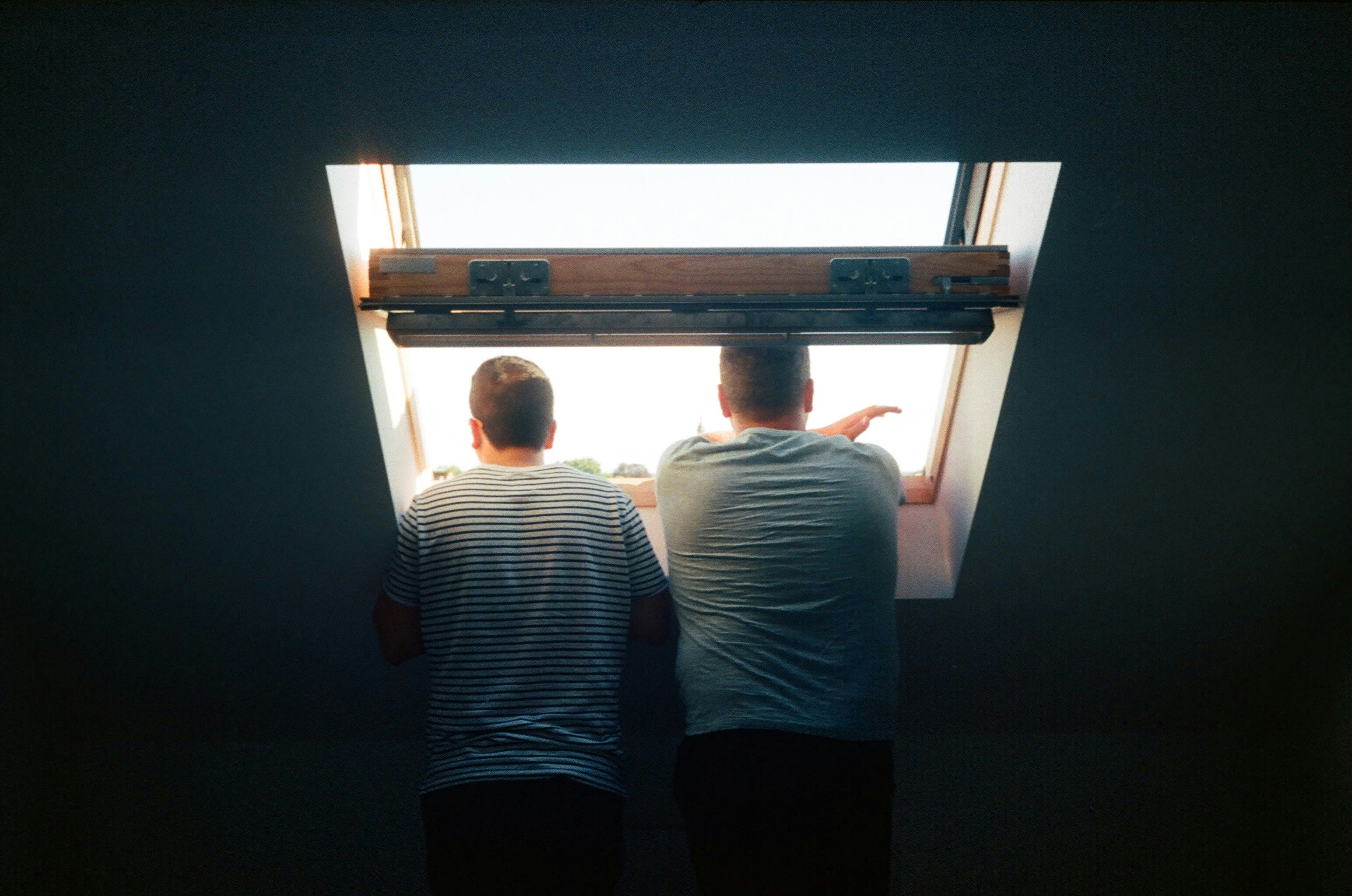
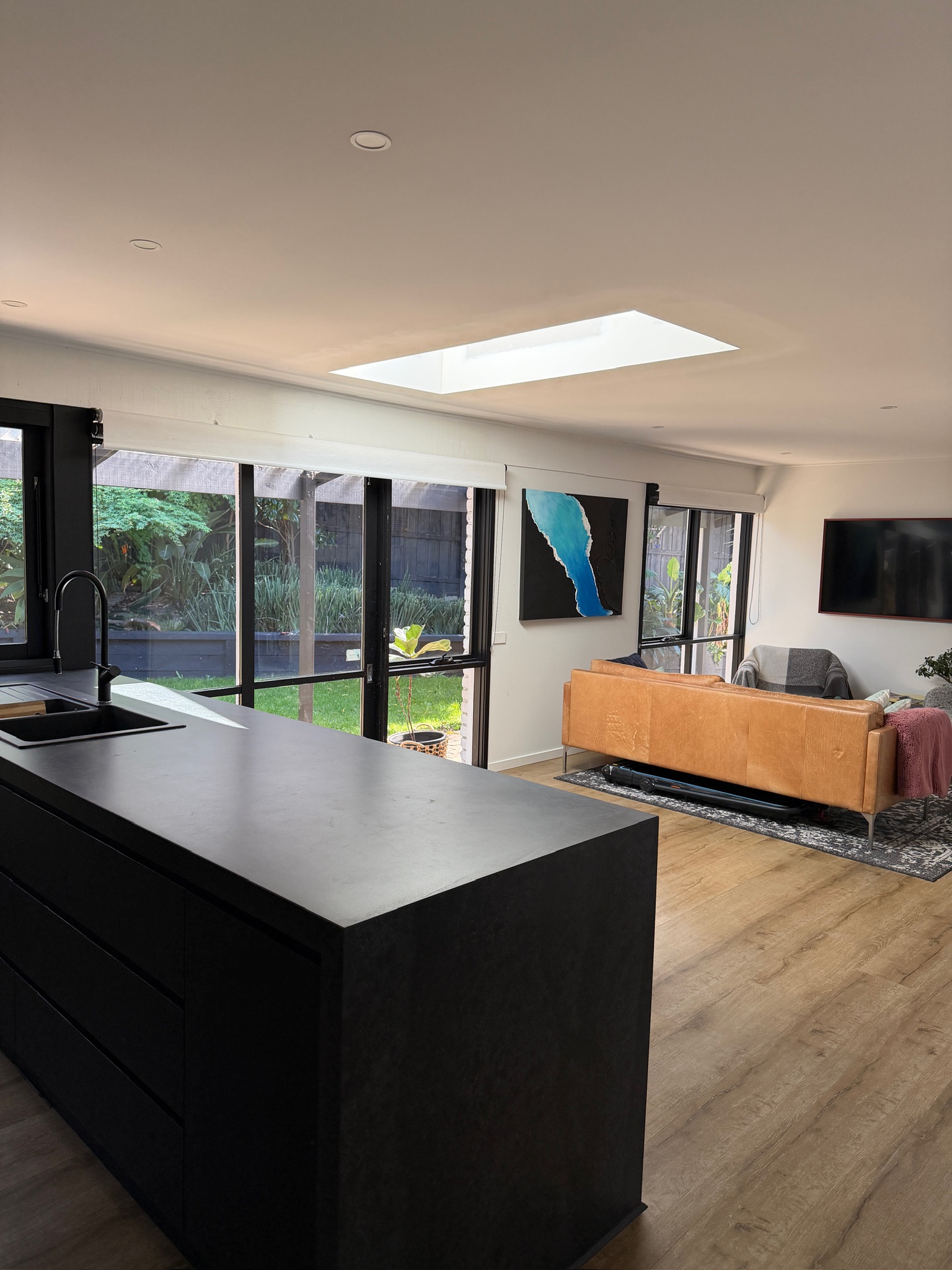
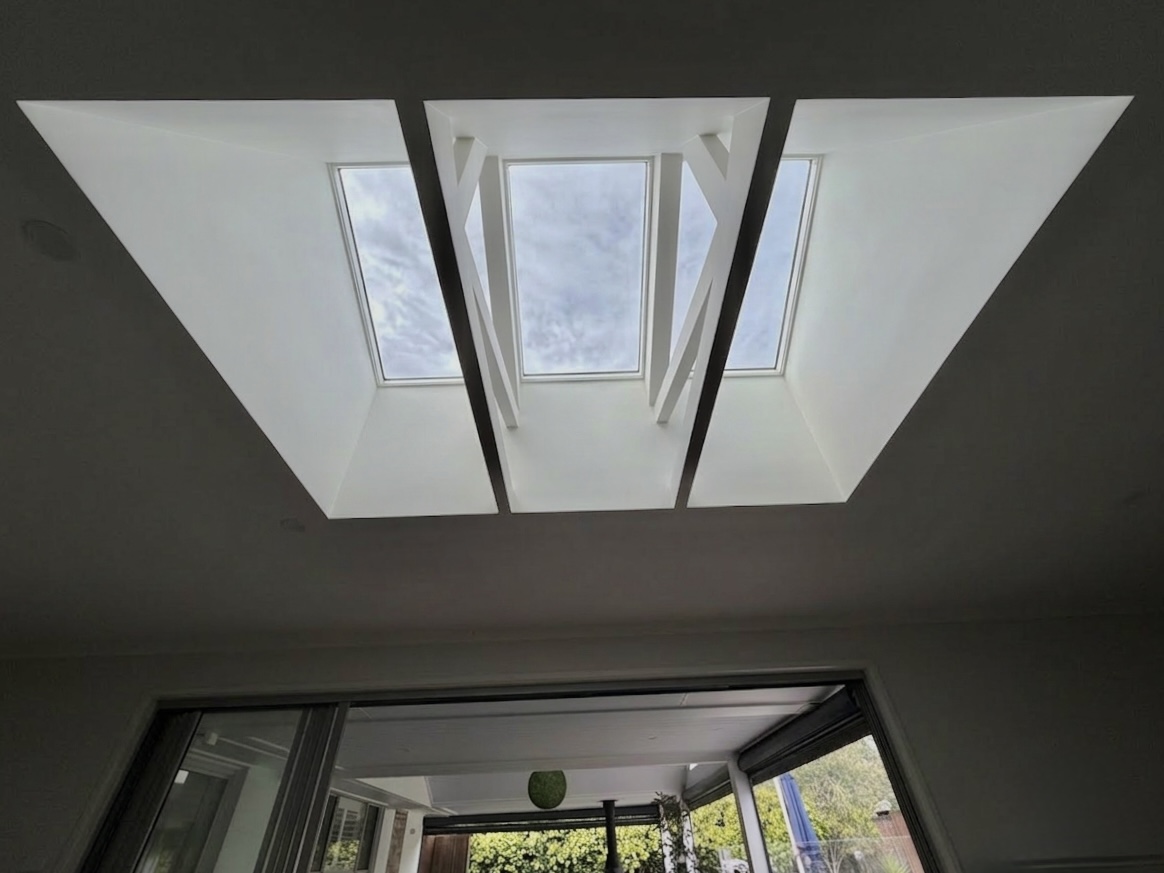
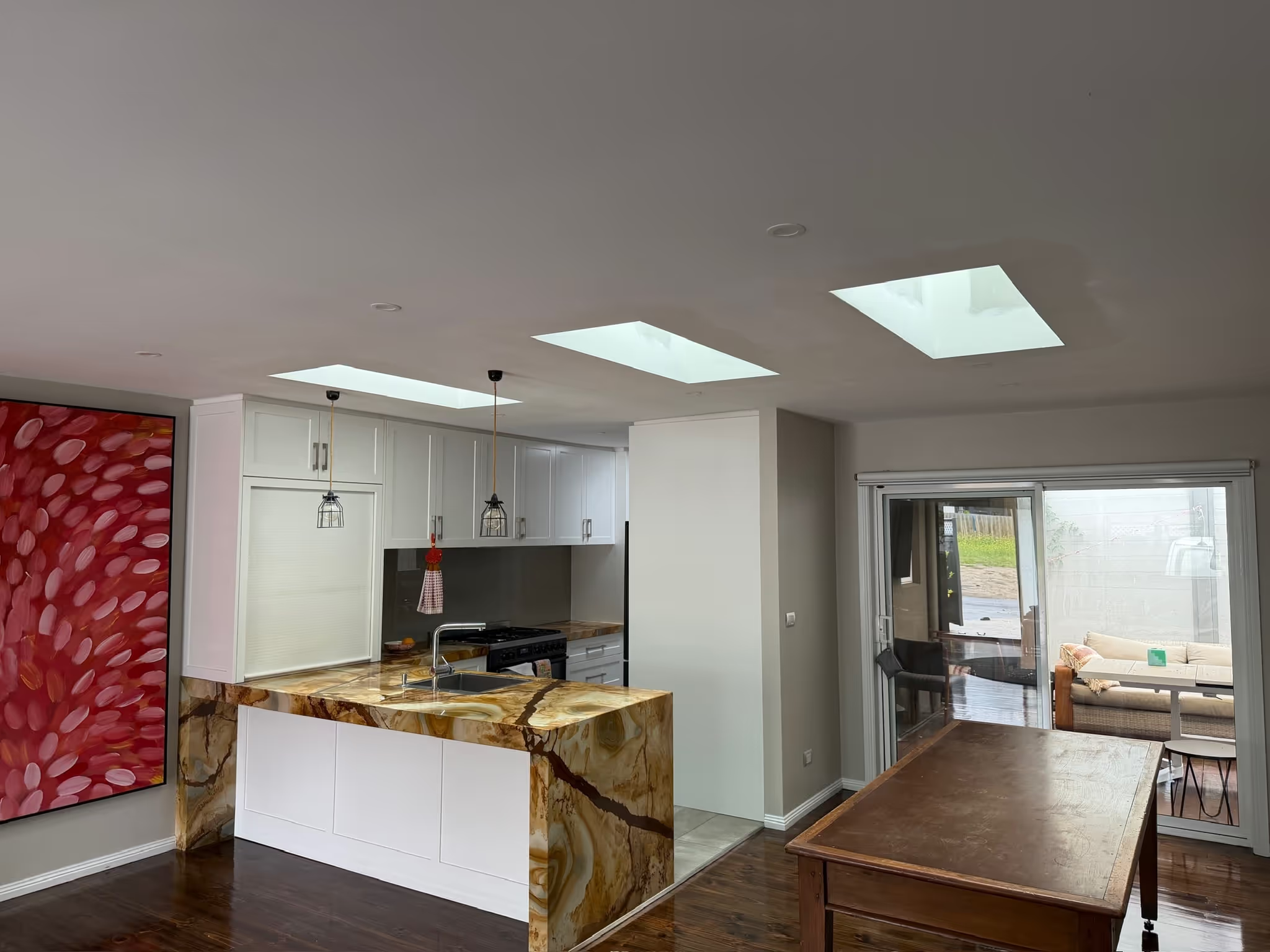
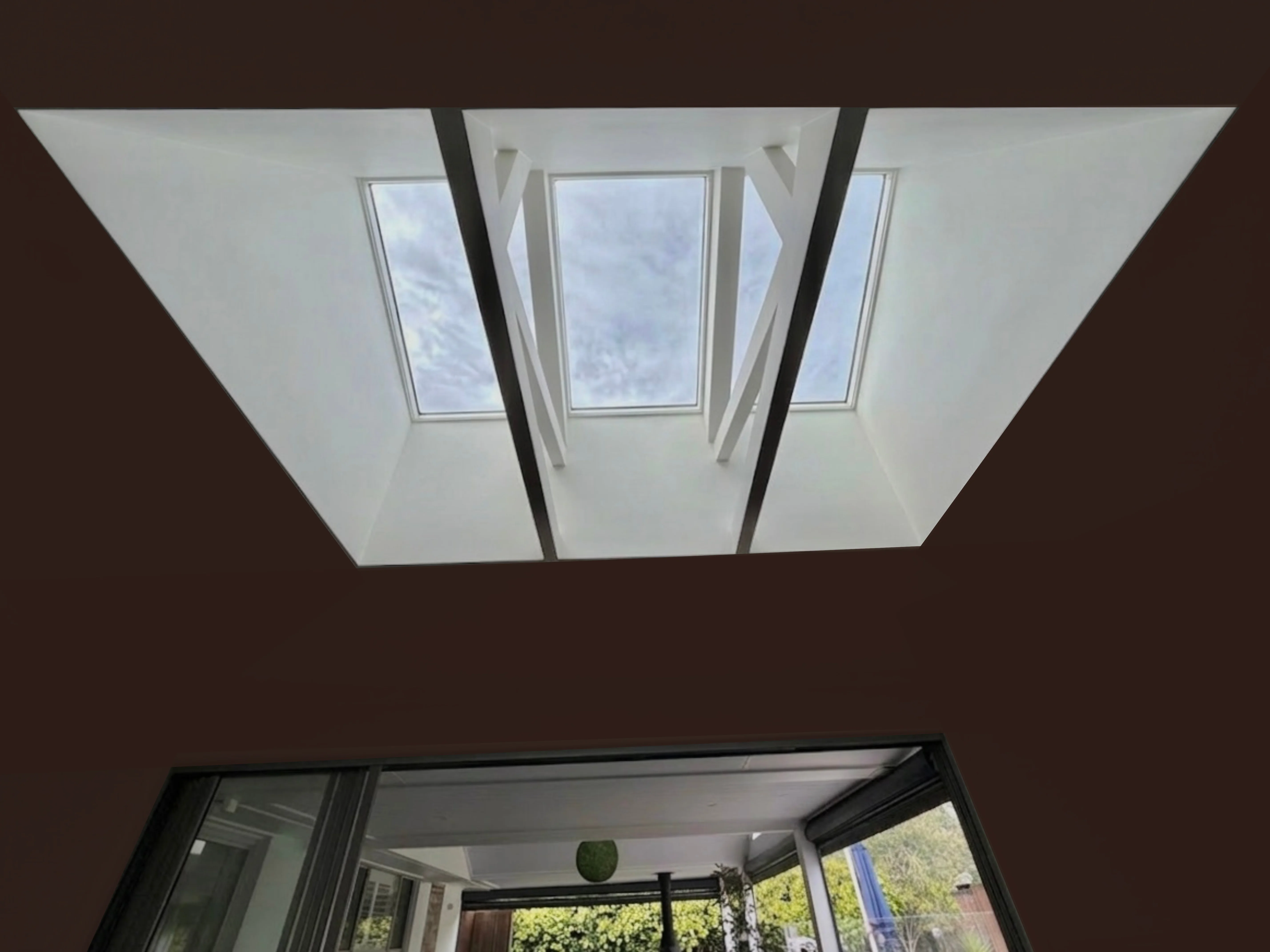
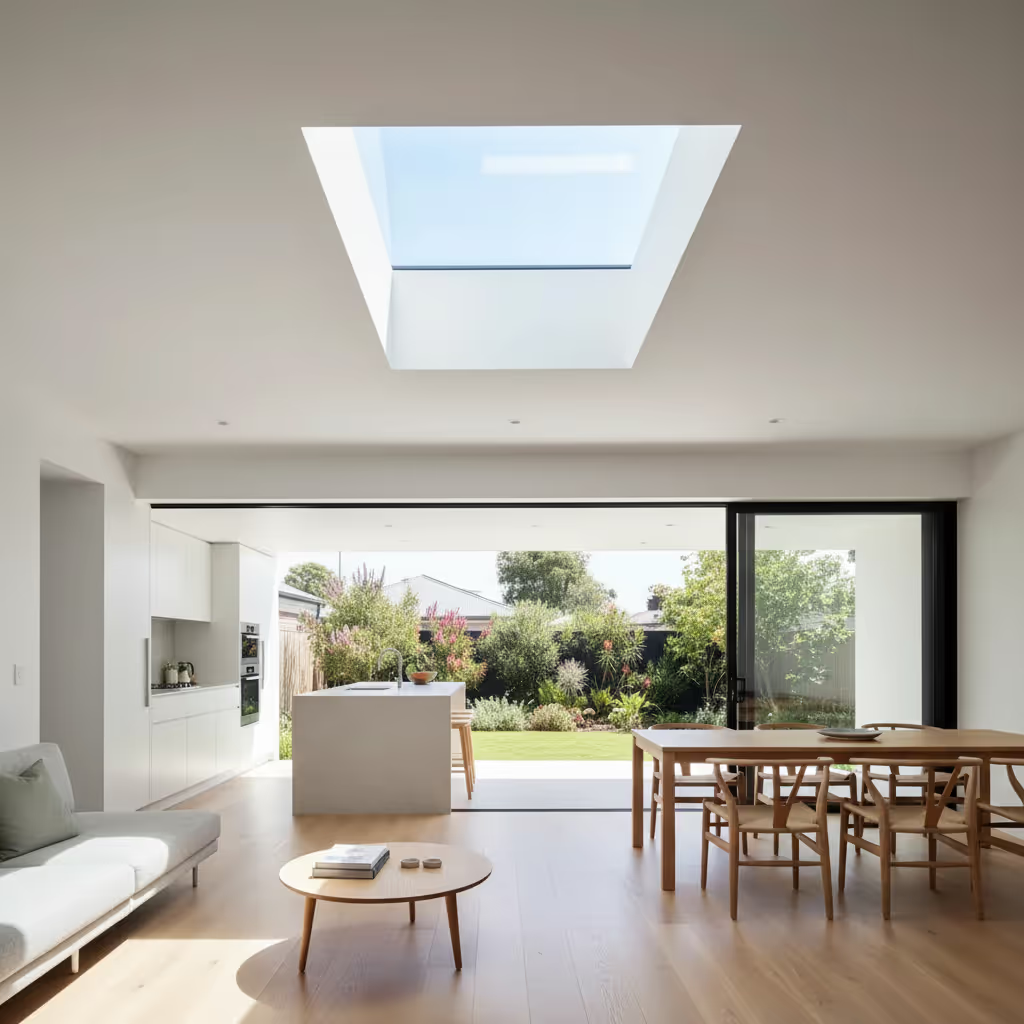
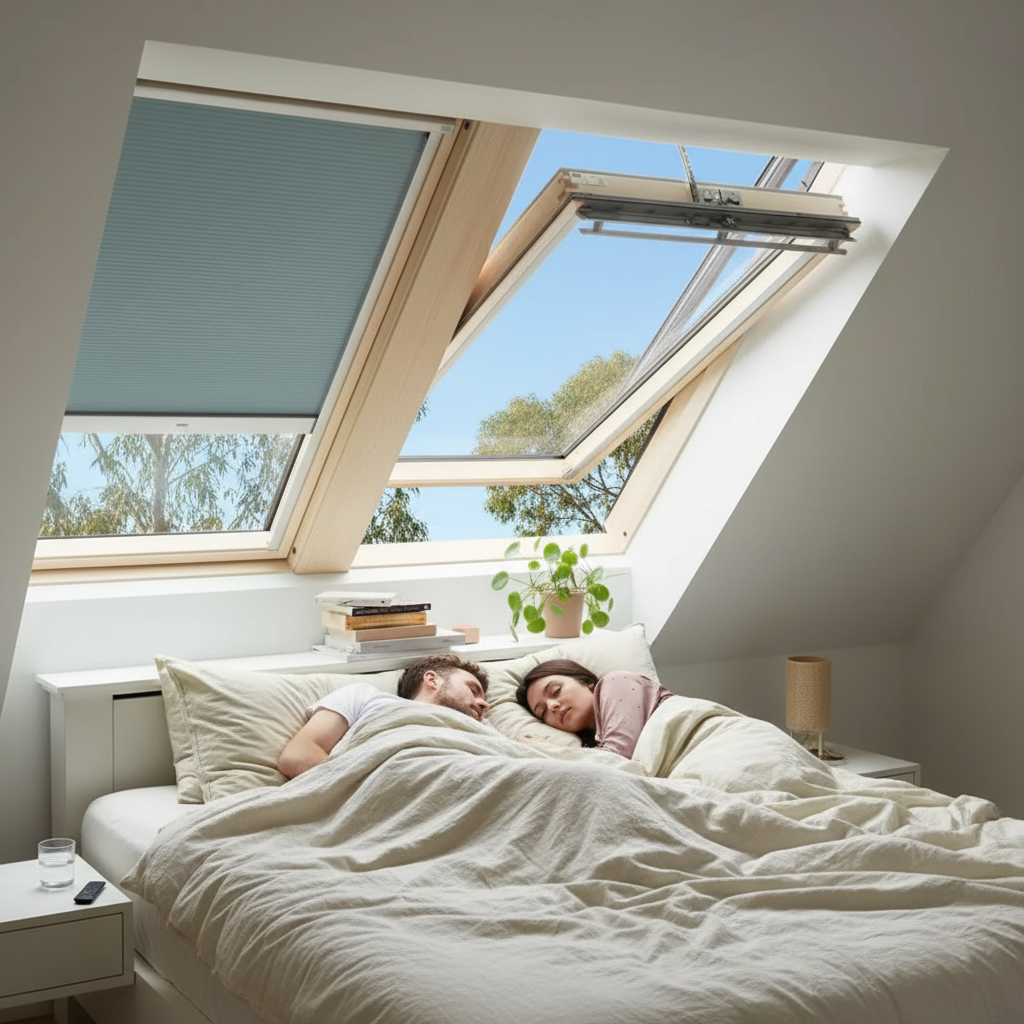
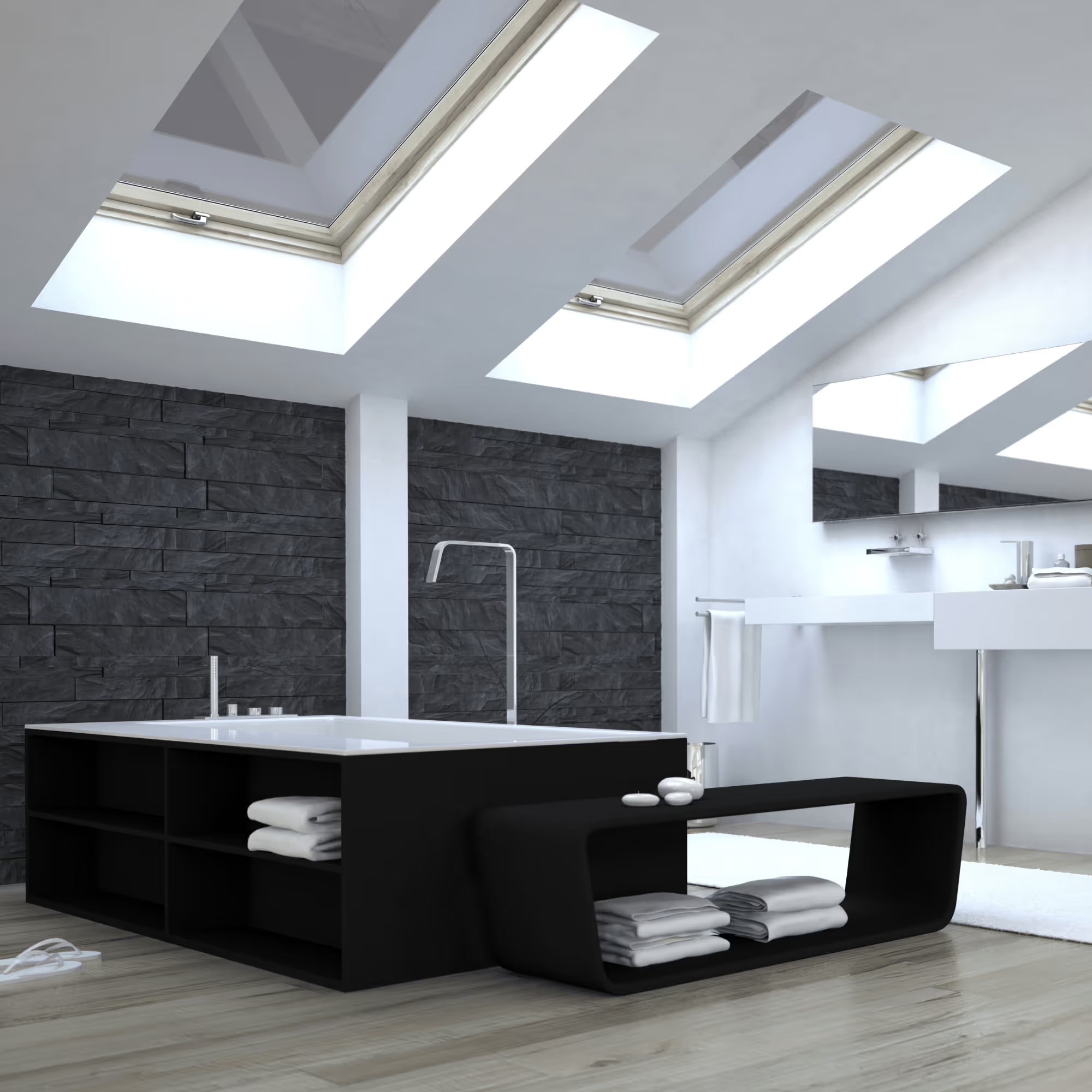
Skylight: A glazed window built into the roof, typically 550mm or larger, that opens straight into the room. You get an actual view of the sky, and often the option to vent it. Best suited to living rooms, kitchens, and bedrooms.
Sunpipe / sun tunnel: A compact dome (usually 300–500mm) feeding a ceiling diffuser through a reflective tube. No sky view, just diffused light, but it's cheaper, faster, and works in spaces too small or structurally awkward for a skylight.
If you also need airflow, say, a bathroom or ensuite, look at a passively vented sunpipe. The frame under the dome is perforated so warm, humid air can escape upward, which helps with condensation and mould.
What Comes in a Sunpipe Kit
A standard flexible sunpipe kit includes:
- A clear acrylic roof dome
- A one-piece flashing unit matched to your roof type
- The flexible reflective tube
- A ceiling collar
- A diffuser (clear prismatic, which scatters light and cuts glare, or frosted "soft glow" for a gentler effect, better suited to bedrooms)
Does Your Roof Type Change the Installation?
Yes, and this is where most sunpipe leaks start. The flashing has to match your roofing material exactly, or water finds a way in around the edges. There are three common flashing profiles:
- Metal deck (Colorbond, corrugated iron): an apron-upstand flashing that sits over the sheeting.
- Corrugated sheet: shaped to follow the corrugation profile so it seals against the ribs instead of bridging over them.
- Tile roofs: a tile-upstand flashing that tucks in with the surrounding tiles rather than sitting on top.
A one-piece flashing (as opposed to something built up on-site from flat sheets) means fewer joins, and fewer joins means fewer places for water to get through. It's a detail worth asking about before you buy.
Roof Pitch, Positioning, and Why the Sun's Angle Matters
Most flexible sunpipes handle pitches from flat (0°) up to around 45°, which covers nearly every Australian roof. Since the tube bends, installers have room to work around trusses, ducting, or wiring that would otherwise block a straight run.
One detail that's easy to overlook: low-angle sun (early morning, late afternoon, winter generally) doesn't hit the dome the same way overhead sun does. Better units fit a reflective band, often mirror-polished aluminium with reflectivity in the high 90% range, near the top of the tube specifically to catch and redirect that low-angle light down the shaft. It's a small feature that noticeably extends how many usable daylight hours the pipe delivers.
How Long Does It Actually Take?
This is the big one. Because there's no shaft to frame, no large ceiling cutout to patch and plaster, and no rafters to cut, a sunpipe install in a single-storey home is usually a same-day job, often just a few hours per unit. Multi-storey homes, tiled roofs, or tight roof cavities that make the tube harder to route will add time.
The typical sequence looks like this:
- Mark the roof and ceiling penetration points
- Cut the roof opening and fit flashing matched to your roof type
- Fit the dome
- Run the flexible tube from roof to ceiling, working around obstructions
- Fit the ceiling ring and diffuser
- Seal and finish
Before You Buy, Check These
- Pitch range: confirm the product suits your roof (most flexible units cover 0°–45°)
- Flashing: make sure it's built for your specific roofing material, not a generic "universal" fit
- Diameter: 300mm, 400mm, and 500mm are standard; bigger means more light, but also more roof space and a wider ceiling cutout
- Ventilation: decide if you want a passively vented unit for a bathroom or ensuite
- Warranty: look for compliance with AS4285 (the Australian skylight standard) and a multi-year warranty covering the whole assembly, not just the dome
- Finish: if it'll be visible from the street, ask whether the dome or flashing can be powder-coated to match your roof
So, Sunpipe or Skylight?
Go with a sunpipe for hallways, toilets, walk-in robes, laundries, and small bathrooms, anywhere you want light but not necessarily a view, and where a full skylight isn't worth the cost or the structural work.
Go with a skylight for living rooms, kitchens, and bedrooms, where a real view of the sky, more light volume, or opening ventilation actually matters.
Plenty of homes use both: skylights where they earn their keep, sunpipes in the smaller rooms a skylight was never going to suit anyway.
Getting It Installed Properly
A sunpipe is a simpler job than a skylight, but it's still a hole in your roof, and a rushed or mismatched flashing job is still the number one cause of leaks, sunpipe or otherwise. Use a licensed installer who can match the flashing to your exact roof profile, confirm the tube can be routed through your roof cavity without kinking (a kink cuts light output), and stands behind the work with a leak-free guarantee.
If you're not sure whether a sunpipe or a skylight is the right call for your space, get an on-site assessment. A good installer tells you honestly what suits your roof, your room, and your budget, not what's most profitable to sell you.
Why Melbourne Homeowners Go With Luminous Skylights
If you're in Melbourne weighing up a sunpipe for that dark hallway or bathroom, Luminous Skylights is worth a call. They're Velux-certified installers who handle carpentry, roofing, and plastering in-house with one crew, no juggling separate trades, no waiting between stages.
What makes them a solid pick for sunpipe work specifically:
- Every roof type covered: tile, metal/Colorbond, slate, and flat roofs. That matters for sunpipes, since getting the flashing profile right for your exact roof is the difference between a dry install and a future leak.
- Leak-free guarantee on every installation, on top of the manufacturer's product warranty.
- Fast turnaround: most jobs are done in hours, not days, since there's no structural shaft to build.
- Straight advice, no upsell: they'll tell you honestly if a sunpipe suits your space better than a full skylight, or vice versa.
They cover Melbourne and surrounds, bayside, inner city, eastern and northern suburbs, down to the Mornington Peninsula, with free on-site quotes.
Get a free, no-obligation quote from Luminous Skylights and find out if a sunpipe is the right fit for your home.
Read next
More from our guides

.png)